Where is the source code of development when "aid collapses, multilateralism fragments" (OECD)?
Where is the source code of development when "aid collapses, multilateralism fragments" (OECD)?
Sams Dine Sy*
June 11, 2026
Sams Dine Sy*
June 11, 2026
SUMMARY
Introduction
1. Locate OECD Alert
2. What remains of the experience accumulated since the beginning of the 70s
2. What remains of the experience accumulated since the beginning of the 70s
with the Interfuturs project, a spin-off of Dynamo?
3. Lessons
3. Lessons
Introduction
OECD warns of a global breakdown: "aid is collapsing, multilateralism is fragmenting". Hence this exercise initiated on May 11, 2026 with a view to "imagining the future of development aid" and "concrete solutions" available in a report scheduled for October. The alert sounds like a state of emergency while making development both a stake (cooperation between players) and a challenge (bilateral or multilateral aid). At the root of this inadequacy lies its inclusion in normative methodology, an oxymoron stemming from policy analysis science, an American invention whose deployment via GAO and HKS explains its supremacy over the rest of the world. The top-down approach through the OECD/DAC (Organisation for Economic Co-operation and Development/Development Assistance Committee) glossary and the "Paris Declaration on Aid Effectiveness" is a perfect illustration of this.
If the source code of development is still not pierced (Globalization & Development, SD Sy, 2007), OECD is exposed to this sentence issued later:
"The answer to the question of whether the work of the Commission (Stiglitz-Sen: Monitoring economic performance, quality of life and sustainability, 2010) opens up a new perspective for development. Indeed, in the presence of large-scale changes and the cohort of risks, uncertainties, turbulence and other dependencies on which they feed, the performance of any economic and social system is measured by its ability to cope with them. What capacity is it? How can we assess the gaps in this area? »…
(file:///C:/Users/perla/Documents/SDSORG MAI23/sdsy-org-dynamique-volitive/Preview/policy-analysis-deployment-in-africathe-sen-stiglitz-report)
If the source code of development is still not pierced (Globalization & Development, SD Sy, 2007), OECD is exposed to this sentence issued later:
"The answer to the question of whether the work of the Commission (Stiglitz-Sen: Monitoring economic performance, quality of life and sustainability, 2010) opens up a new perspective for development. Indeed, in the presence of large-scale changes and the cohort of risks, uncertainties, turbulence and other dependencies on which they feed, the performance of any economic and social system is measured by its ability to cope with them. What capacity is it? How can we assess the gaps in this area? »…
(file:///C:/Users/perla/Documents/SDSORG MAI23/sdsy-org-dynamique-volitive/Preview/policy-analysis-deployment-in-africathe-sen-stiglitz-report)
1. Locate the OECD alert
Coming from such an old organization, the alert is striking in view of its singular place in the international system since the end of the 2nd World War:
- "Economic Cooperation Administration" (ECA, 3 April 1948) responsible for managing the Marshall Plan (1947-51) through a bilateral aid agency in each of the first 16 European beneficiary countries;
- completed 2 weeks later by the creation of an "Organisation for European Economic Co-operation" (OEEC, 6 April 1948) designed as a "European Wall" following the outbreak of the Cold War;
- before being transformed into the "Organisation for Economic Co-operation and Development" (OECD, 30 September 1961), i.e. a decade after the interruption of the Marshall Plan;
- structure the global economy around its work covering a wide range of fields, including science, technology, innovation, public policy and international relations, among others;
- while remaining a hybrid that is both the ancestor of USAID, at the origin of the European Union, and a selective version of the UN when 33 of the first 55 countries to sign the Charter (26 June 1945) were excluded.
It still does not become a multilateral organization when the number of members is strictly limited: 16 European countries at its creation, 18 once the USA and Canada joined it, 20 in 1960 and 38 to date. One continent - Africa - is still excluded despite the establishment in 1962 of the Development Centre, which has since become an independent unit to support the "formulation of public policies in the field of development, by means of multidisciplinary work". Except that it currently covers barely 55 countries, including 13 African and 13 OECD members, while the United Nations has 193.
The place of the organization in the international system makes it at most the "guardian angel" of the regime of absolute domination of the United States, supplemented by a whole bureaucratic machinery whose visible part is not limited to this list: Security Council, IMF, World Bank, WTO, G7, NATO.
Also, the alert reveals at most that the depositary of this regime, the leading provider of aid since the Marshall Plan after having been the initiator of multilateralism with the UN, is now "without a compass", and therefore the first to be affected. As if so many "concrete solutions" offered for half a century by OECD were not "Interfuturs" (1974)" which makes it the first mover of foresight deployment in Europe, "Yhe World in 2020 (1997)", “Vision for the future” (2011)...
However, since its creation, the organization has been experimenting with various stages of the policy cycle, starting with the implementation of the Marshall Plan around ECA. In the midst of the Cold War, it monitored the development of its beneficiaries, served as a body for monitoring/evaluating their economic performance, published the "Quality Standards for Development Evaluation 2010" and initiated the "Busan Partnership for Effective Development Cooperation, 2011)". His intervention with "Pure Iasa" contributes to the emergence of the physical science of climate jointly with the United Nations (Ipbs) enshrining the SDGs around the slogan "making nature a capital" (Dasgupta Review, February 2021).
It is necessary to subject the approach to a critical examination, if only to avoid misunderstandings and disappointments when no information is available on the type of megatrend, the “wild cards” and signals (weak, strong) allowing to locate the nature of the rupture (creative or destructive?), its magnitude (radical or relative?) as well as the invariant affected (demographic ageing? anthropocene? multi-secular stagnation?). To inscribe one's scope only in space (world or global) is not enough and only raises questions.
- "Economic Cooperation Administration" (ECA, 3 April 1948) responsible for managing the Marshall Plan (1947-51) through a bilateral aid agency in each of the first 16 European beneficiary countries;
- completed 2 weeks later by the creation of an "Organisation for European Economic Co-operation" (OEEC, 6 April 1948) designed as a "European Wall" following the outbreak of the Cold War;
- before being transformed into the "Organisation for Economic Co-operation and Development" (OECD, 30 September 1961), i.e. a decade after the interruption of the Marshall Plan;
- structure the global economy around its work covering a wide range of fields, including science, technology, innovation, public policy and international relations, among others;
- while remaining a hybrid that is both the ancestor of USAID, at the origin of the European Union, and a selective version of the UN when 33 of the first 55 countries to sign the Charter (26 June 1945) were excluded.
It still does not become a multilateral organization when the number of members is strictly limited: 16 European countries at its creation, 18 once the USA and Canada joined it, 20 in 1960 and 38 to date. One continent - Africa - is still excluded despite the establishment in 1962 of the Development Centre, which has since become an independent unit to support the "formulation of public policies in the field of development, by means of multidisciplinary work". Except that it currently covers barely 55 countries, including 13 African and 13 OECD members, while the United Nations has 193.
The place of the organization in the international system makes it at most the "guardian angel" of the regime of absolute domination of the United States, supplemented by a whole bureaucratic machinery whose visible part is not limited to this list: Security Council, IMF, World Bank, WTO, G7, NATO.
Also, the alert reveals at most that the depositary of this regime, the leading provider of aid since the Marshall Plan after having been the initiator of multilateralism with the UN, is now "without a compass", and therefore the first to be affected. As if so many "concrete solutions" offered for half a century by OECD were not "Interfuturs" (1974)" which makes it the first mover of foresight deployment in Europe, "Yhe World in 2020 (1997)", “Vision for the future” (2011)...
However, since its creation, the organization has been experimenting with various stages of the policy cycle, starting with the implementation of the Marshall Plan around ECA. In the midst of the Cold War, it monitored the development of its beneficiaries, served as a body for monitoring/evaluating their economic performance, published the "Quality Standards for Development Evaluation 2010" and initiated the "Busan Partnership for Effective Development Cooperation, 2011)". His intervention with "Pure Iasa" contributes to the emergence of the physical science of climate jointly with the United Nations (Ipbs) enshrining the SDGs around the slogan "making nature a capital" (Dasgupta Review, February 2021).
It is necessary to subject the approach to a critical examination, if only to avoid misunderstandings and disappointments when no information is available on the type of megatrend, the “wild cards” and signals (weak, strong) allowing to locate the nature of the rupture (creative or destructive?), its magnitude (radical or relative?) as well as the invariant affected (demographic ageing? anthropocene? multi-secular stagnation?). To inscribe one's scope only in space (world or global) is not enough and only raises questions.
2. What remains of the experience accumulated since the beginning of the 70s with Interfuturs?
It is not a question of rewriting the history of the Organization, but rather of illustrating the controversy within it between supporters of an orthodox approach and supporters of a greater multi-disciplinary or even transdisciplinary ambition. The former close the door to non-members while the latter advocate a real opening to the rest of the world.
A controversy that draws on the mandate redefined in 1951. While Marshall aid is coming to an end, the organization is no longer focused on Europe but on concepts that are still vague: Cooperation and Economic Development. Except that in practice, nothing changed despite the creation of the Development Centre a decade later (1961): most of the interventions were still focused on the economy of the 38 European member countries. The reason for this is the balance of power that is established between "redeemers" in the service of a redemptive cause structured in "family resemblance". The former, still opposed to the abolition of slavery, remains more than ever attached to the Wilsonian tradition (1913-1921) of which the Ku Klux Klan (KKK) is the embodiment. This tradition was at the origin of the blockage until 1948 of the integration of the Proposal for Racial Equality into the Charter of the League of Nations with the enthusiastic support of the French, Italian and Greek delegations.
https://fr.wikipedia.org/wiki/Woodrow_Wilson#Pour_approfondir
The second is part of the "demo-ressourcist" version: the essential thing is free access to resources, hence the obligation to block any form of industrialization by import-substitution in non-member countries, even if it means limiting world growth as advocated by the Club of Rome under the guise of the "Electronic Oracle", an intellectual tradition born in the temple of American science thanks to the System Model and deployed in "Triple Helix".
A real "war of paradigms" is therefore taking place, polluting the atmosphere of the organization. The General Secretariat (SG) went around in circles between these two positions, until the day a request for access to the organization's bibliographic resources arrived on its table. A strange request coming from a simple student, who was also a follower of the "free" movement in vogue at the time, to the point of choosing a thesis subject covering three fields of research - development economics, multinational firms and regional integration based on the case of West Africa in a context of international cooperation plagued by the Cold War. Except that before contacting OECD, the person concerned wipes plasters with any administration or service contacted, as academic libraries are devoid of useful sources. Everywhere the same reaction: taboo subject! you have no right to treat it! out!
After several failed attempts to collect data, the idea of returning to a more standard case study covering Europe only through a single field was imposed: economy, cooperation or business. The OECD's expression of interest in the subject then narrowly saved the initial choice, but on one condition: to help inform the SG's decision, by making an inventory within its library of all the resources available on the 3 themes selected. A library filled with illustrious academic journals but stored because they are not used by the staff , not only because of a lack of time but because it deals with subjects that are too specialized for an organization that is supposed to disseminate work accessible to European national administrations, destroyed by wars and locked into an obsolete organizational model: Jacobin, Westphalian, imperial, royal...
It was therefore necessary - as many times as necessary a week - to report to different experts groups according to their availability and willing to brainstorm around a subject that intrigues more than one. In exchange, take advantage of their advice and opinions to address it and deepen it. After several months, the "bookworm" finishes his task, accumulating enough evidence on the imperative for OECD to move away from the orthodox approach, if only to anticipate the consequences on member countries of possible ruptures in the rest of the world, to evolve its research and analysis methodology.
However, some aspects of the subject remain to be explored in greater depth due to a lack of relevant bibliographical information. OECD then contacted other sources and recommended that they go there while continuing to share the relevant references identified, in particular on the African economy and especially on this still strange notion of a "multinational firm", reduced to the large para or semi-public firms which nevertheless played a key role in the management of Marshall Aid by ensuring in particular the strict application of the "counter-value mechanism" and the organization of productivity missions in the profit from their agenda. These two subjects are very poorly documented, even though they are at the heart of the erosion of raw materials extracted from the former colonies before being re-exported to their headquarters, confining European countries to the consumption of goods imported from the USA and discouraging or even prohibiting any form of import-substitution in their backyard.
This is how a second stay was accepted by the Metra Group. The General Management of its subsidiary Sema has shown its interest in the subject. But in the absence of relevant bibliographic sources, he recommends the organization of brainstorming sessions with available experts on how to approach the subject if it were entrusted to them. A subject that challenges its field of action (Europe) and the traditional approach rather focused on industrial engineering (operational research, computer science), planning (applied economics, modelling, management) as well illustrated by its interventions at the various Congresses of the French Association for Economic and Technical Cybernetics (AFCET) since its creation in 1968 and whose 4th (1974) devoted to Decision Support is a major step towards decision analysis and a small step towards policy analysis.
At the end of several weeks of meetings, fruitful ideas emerged, as well as contact with a unit that turned out to be the ancestor of the CEPII and the OFCE, whose head authorized access to several issues of specialized journals on the condition that he completely preserve his anonymity for fear of sanctions from his superiors.
A final stay in the UN library provides most of the sources on West Africa as well as on the economic (UNECA, UNCTAD, FAO, ILO, UNIDO, UNITAR) and scientific (UNESCO) levels.
This is how a voluminous thesis was written around a title chosen to avoid any censorship: "Marketing", this brand new discipline reserved for "Multinational Firms", "Economic Development" more concrete than "Development Economics", "West Africa" less suspect than "Regional Integration". The obligation not to exceed 200 pages allows permission to be typed to be obtained, thus obliging the number of pages devoted to a bibliography as imposing as it is unpublished on such a subject to be reduced to a strict minimum.
During this time, OECD definitively switched to the multi- and transdisciplinary approach to economic development and was introduced to the prospective approach to address this issue on a global scale, even if it meant subcontracting Interfuturs to SEMA with the authorization of the Federal State to deploy via MIT the methodological reference framework (Dynamo) at the origin of "Limits of Growth" and "World Dynamics" but also of the clash of models triggered by the Meadows report. providing the demo-dessourcist family with the opportunity to deploy the "Tragedy of the Commons" in the Sahel via OECD, SEMA and Interfuturs.
This episode left indelible marks, as revealed by several strangely identical situations later via other exercises such as a study of the potential impact of the European Monetary System, EMS (UNECA), a survey of planning systems (IDEP/UNECA/UNDP), capacity building for policy analysis (ACBF), a regional and global foresight exercise (UN Millennium Project)...)...
A controversy that draws on the mandate redefined in 1951. While Marshall aid is coming to an end, the organization is no longer focused on Europe but on concepts that are still vague: Cooperation and Economic Development. Except that in practice, nothing changed despite the creation of the Development Centre a decade later (1961): most of the interventions were still focused on the economy of the 38 European member countries. The reason for this is the balance of power that is established between "redeemers" in the service of a redemptive cause structured in "family resemblance". The former, still opposed to the abolition of slavery, remains more than ever attached to the Wilsonian tradition (1913-1921) of which the Ku Klux Klan (KKK) is the embodiment. This tradition was at the origin of the blockage until 1948 of the integration of the Proposal for Racial Equality into the Charter of the League of Nations with the enthusiastic support of the French, Italian and Greek delegations.
https://fr.wikipedia.org/wiki/Woodrow_Wilson#Pour_approfondir
The second is part of the "demo-ressourcist" version: the essential thing is free access to resources, hence the obligation to block any form of industrialization by import-substitution in non-member countries, even if it means limiting world growth as advocated by the Club of Rome under the guise of the "Electronic Oracle", an intellectual tradition born in the temple of American science thanks to the System Model and deployed in "Triple Helix".
A real "war of paradigms" is therefore taking place, polluting the atmosphere of the organization. The General Secretariat (SG) went around in circles between these two positions, until the day a request for access to the organization's bibliographic resources arrived on its table. A strange request coming from a simple student, who was also a follower of the "free" movement in vogue at the time, to the point of choosing a thesis subject covering three fields of research - development economics, multinational firms and regional integration based on the case of West Africa in a context of international cooperation plagued by the Cold War. Except that before contacting OECD, the person concerned wipes plasters with any administration or service contacted, as academic libraries are devoid of useful sources. Everywhere the same reaction: taboo subject! you have no right to treat it! out!
After several failed attempts to collect data, the idea of returning to a more standard case study covering Europe only through a single field was imposed: economy, cooperation or business. The OECD's expression of interest in the subject then narrowly saved the initial choice, but on one condition: to help inform the SG's decision, by making an inventory within its library of all the resources available on the 3 themes selected. A library filled with illustrious academic journals but stored because they are not used by the staff , not only because of a lack of time but because it deals with subjects that are too specialized for an organization that is supposed to disseminate work accessible to European national administrations, destroyed by wars and locked into an obsolete organizational model: Jacobin, Westphalian, imperial, royal...
It was therefore necessary - as many times as necessary a week - to report to different experts groups according to their availability and willing to brainstorm around a subject that intrigues more than one. In exchange, take advantage of their advice and opinions to address it and deepen it. After several months, the "bookworm" finishes his task, accumulating enough evidence on the imperative for OECD to move away from the orthodox approach, if only to anticipate the consequences on member countries of possible ruptures in the rest of the world, to evolve its research and analysis methodology.
However, some aspects of the subject remain to be explored in greater depth due to a lack of relevant bibliographical information. OECD then contacted other sources and recommended that they go there while continuing to share the relevant references identified, in particular on the African economy and especially on this still strange notion of a "multinational firm", reduced to the large para or semi-public firms which nevertheless played a key role in the management of Marshall Aid by ensuring in particular the strict application of the "counter-value mechanism" and the organization of productivity missions in the profit from their agenda. These two subjects are very poorly documented, even though they are at the heart of the erosion of raw materials extracted from the former colonies before being re-exported to their headquarters, confining European countries to the consumption of goods imported from the USA and discouraging or even prohibiting any form of import-substitution in their backyard.
This is how a second stay was accepted by the Metra Group. The General Management of its subsidiary Sema has shown its interest in the subject. But in the absence of relevant bibliographic sources, he recommends the organization of brainstorming sessions with available experts on how to approach the subject if it were entrusted to them. A subject that challenges its field of action (Europe) and the traditional approach rather focused on industrial engineering (operational research, computer science), planning (applied economics, modelling, management) as well illustrated by its interventions at the various Congresses of the French Association for Economic and Technical Cybernetics (AFCET) since its creation in 1968 and whose 4th (1974) devoted to Decision Support is a major step towards decision analysis and a small step towards policy analysis.
At the end of several weeks of meetings, fruitful ideas emerged, as well as contact with a unit that turned out to be the ancestor of the CEPII and the OFCE, whose head authorized access to several issues of specialized journals on the condition that he completely preserve his anonymity for fear of sanctions from his superiors.
A final stay in the UN library provides most of the sources on West Africa as well as on the economic (UNECA, UNCTAD, FAO, ILO, UNIDO, UNITAR) and scientific (UNESCO) levels.
This is how a voluminous thesis was written around a title chosen to avoid any censorship: "Marketing", this brand new discipline reserved for "Multinational Firms", "Economic Development" more concrete than "Development Economics", "West Africa" less suspect than "Regional Integration". The obligation not to exceed 200 pages allows permission to be typed to be obtained, thus obliging the number of pages devoted to a bibliography as imposing as it is unpublished on such a subject to be reduced to a strict minimum.
During this time, OECD definitively switched to the multi- and transdisciplinary approach to economic development and was introduced to the prospective approach to address this issue on a global scale, even if it meant subcontracting Interfuturs to SEMA with the authorization of the Federal State to deploy via MIT the methodological reference framework (Dynamo) at the origin of "Limits of Growth" and "World Dynamics" but also of the clash of models triggered by the Meadows report. providing the demo-dessourcist family with the opportunity to deploy the "Tragedy of the Commons" in the Sahel via OECD, SEMA and Interfuturs.
This episode left indelible marks, as revealed by several strangely identical situations later via other exercises such as a study of the potential impact of the European Monetary System, EMS (UNECA), a survey of planning systems (IDEP/UNECA/UNDP), capacity building for policy analysis (ACBF), a regional and global foresight exercise (UN Millennium Project)...)...
A few anecdotes illustrate all these adventures
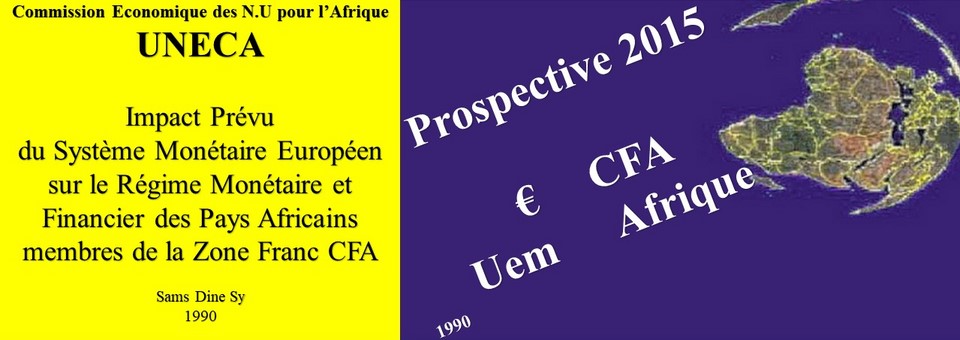
The initially fierce opposition to any exercise to assess the impact of the EMS on the monetary and financial regime of FCFA Zone (1989) forced UNECA to deepen its reflection, thus discovering that it was not simply a matter of "UBDISCIPLINES 7. Macroeconomics; JEL: E - Macroeconomics and Monetary Economics".
Hence the idea of listing in one's library all useful information, until all obstacles to the exercise are removed (French State, Bank of France, EEC Commission, BCEAO, BEAC, African governments of the member countries of the CFA Franc Zone, etc.). And to carry out brainstorming sessions with experts interested in the subject. As in 1971 at OECD, an intense controversy is taking place between supporters of an orthodox approach of the monetary macroeconomics type and supporters of another which makes it a rather policy problem who recommend others - decision-making analysis, foresight - without any source being available. Once the obstacles had been removed thanks to the Executive Secretary's ultimatum to the other protagonists to bring the matter before the Secretary-General of the United Nations, several brainstorming sessions were also organized within the BDF, the French Ministry of Economy and Finance, the EEC Commission and the BCEAO. Everyone benefits from this by understanding the international dimension of the ECU, the prospect of political union in Europe, the opportunities for regional integration in Africa from the western and central regions... All these themes offer a path towards an inter- and transdisciplinary approach, as was the case at OECD in 1971.
During the survey on planning systems in Africa (1992), the OECD experience was revived in a North African country (Morocco) where any discussion on this subject was forbidden both within the ministerial departments concerned and within the university, which was inaccessible in a state of siege by the army. His Royal Highness's distrust of any attempt by the United Nations to meddle in internal affairs places the mission under supervision through his Senior Advisor. It was necessary to discreetly organize brainstorming sessions preserving the complete anonymity of the speakers to achieve a critical synthesis on the state of the system which, once transmitted to the highest level, triggers a profound reform explaining in itself how this country succeeds in a few decades in reconstituting the old "trans-Saharan roads" in a bank version, air transport, import substitution... To the point of being immediately identified as "The Next Dragon" (S. Leymarie & J. Triper, Preface by M. Porter, 1992, EDDIF). To the point of even assimilating himself, as he did during the CAF 2026, rather to a tiger which, like another famous, "proclaims its tigritude, throws itself on its prey and devours it". It is also one of the few countries to embark on a foresight exercise using the still nascent exploratory methodology, unlike so many others that are content to "copy the toolbox of industrial and technical foresight, which is often a by-product of marketing" that is totally inadequate. including when it is described as "strategic" (P. Musso: Territories and Cyberspace in 2030, DIACT, 2008)
All these experiences are finally consecrated by the series of exercises carried out as part of the preparation of the UN Millennium Summit (2000-2001) in which Africa is still making an exceptional contribution to date (UN 80) on various themes: secular analysis, cooperation and development, the discursive model of African leaders, science and its networks, vision and proposals for the 3rd millennium...
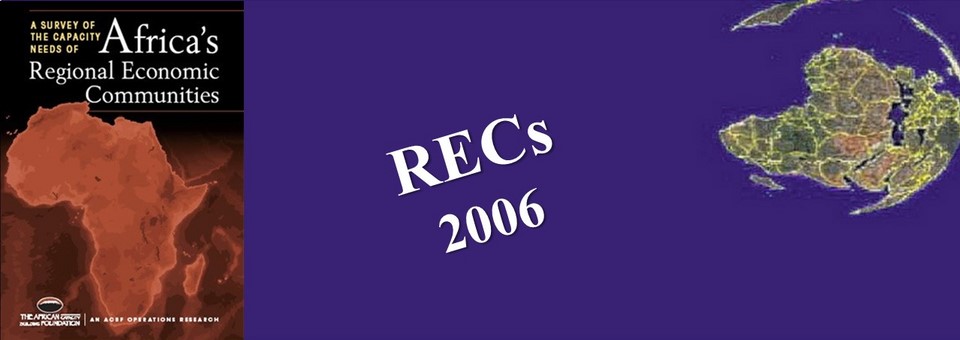
A number of OECD studies are thus revisited, including "The World in 2020", which locks Africa into an overly prescriptive scenario. The climax is reached when this organization plans an operation intended to empty of all its content the "Regional Economic Communities (RECs )Action Plan for the Implementation of NEPAD" whose formulation draws on an approach based on both foresight and policy analysis, arousing astonishment and fascination everywhere. The major powers see this as a way for Africa to do without aid and to empty the "partnership between rich and poor" of all content. The Development Centre invites the current Chairman of NEPAD to present it, but the lack of knowledge of its content betrays a passive attitude, just to receive public aid. The 2007 G8 Summit in Heiligendamm, Germany, did the rest, on the sidelines of which several African leaders were invite. After celebrating its soft version, the major powers agreed to support it on the condition that the steering of regional integration be entrusted to the World Bank. The latter ended up abandoning everything in 2010, under the pretext of misunderstandings, difficulties, and leadership problems. Du bon usage de OECD.
Hence the idea of listing in one's library all useful information, until all obstacles to the exercise are removed (French State, Bank of France, EEC Commission, BCEAO, BEAC, African governments of the member countries of the CFA Franc Zone, etc.). And to carry out brainstorming sessions with experts interested in the subject. As in 1971 at OECD, an intense controversy is taking place between supporters of an orthodox approach of the monetary macroeconomics type and supporters of another which makes it a rather policy problem who recommend others - decision-making analysis, foresight - without any source being available. Once the obstacles had been removed thanks to the Executive Secretary's ultimatum to the other protagonists to bring the matter before the Secretary-General of the United Nations, several brainstorming sessions were also organized within the BDF, the French Ministry of Economy and Finance, the EEC Commission and the BCEAO. Everyone benefits from this by understanding the international dimension of the ECU, the prospect of political union in Europe, the opportunities for regional integration in Africa from the western and central regions... All these themes offer a path towards an inter- and transdisciplinary approach, as was the case at OECD in 1971.
During the survey on planning systems in Africa (1992), the OECD experience was revived in a North African country (Morocco) where any discussion on this subject was forbidden both within the ministerial departments concerned and within the university, which was inaccessible in a state of siege by the army. His Royal Highness's distrust of any attempt by the United Nations to meddle in internal affairs places the mission under supervision through his Senior Advisor. It was necessary to discreetly organize brainstorming sessions preserving the complete anonymity of the speakers to achieve a critical synthesis on the state of the system which, once transmitted to the highest level, triggers a profound reform explaining in itself how this country succeeds in a few decades in reconstituting the old "trans-Saharan roads" in a bank version, air transport, import substitution... To the point of being immediately identified as "The Next Dragon" (S. Leymarie & J. Triper, Preface by M. Porter, 1992, EDDIF). To the point of even assimilating himself, as he did during the CAF 2026, rather to a tiger which, like another famous, "proclaims its tigritude, throws itself on its prey and devours it". It is also one of the few countries to embark on a foresight exercise using the still nascent exploratory methodology, unlike so many others that are content to "copy the toolbox of industrial and technical foresight, which is often a by-product of marketing" that is totally inadequate. including when it is described as "strategic" (P. Musso: Territories and Cyberspace in 2030, DIACT, 2008)
All these experiences are finally consecrated by the series of exercises carried out as part of the preparation of the UN Millennium Summit (2000-2001) in which Africa is still making an exceptional contribution to date (UN 80) on various themes: secular analysis, cooperation and development, the discursive model of African leaders, science and its networks, vision and proposals for the 3rd millennium...
A number of OECD studies are thus revisited, including "The World in 2020", which locks Africa into an overly prescriptive scenario. The climax is reached when this organization plans an operation intended to empty of all its content the "Regional Economic Communities (RECs )Action Plan for the Implementation of NEPAD" whose formulation draws on an approach based on both foresight and policy analysis, arousing astonishment and fascination everywhere. The major powers see this as a way for Africa to do without aid and to empty the "partnership between rich and poor" of all content. The Development Centre invites the current Chairman of NEPAD to present it, but the lack of knowledge of its content betrays a passive attitude, just to receive public aid. The 2007 G8 Summit in Heiligendamm, Germany, did the rest, on the sidelines of which several African leaders were invite. After celebrating its soft version, the major powers agreed to support it on the condition that the steering of regional integration be entrusted to the World Bank. The latter ended up abandoning everything in 2010, under the pretext of misunderstandings, difficulties, and leadership problems. Du bon usage de OECD.
3. Lessons
To speak, six decades later, of a "rupture of global scope" without revisiting the methodological trajectory, is quite simply to offer the "redeemers" and other demo-sourcers the opportunity to regain the initiative in case they have lost it since "aid is collapsing" and "multilateralism is fragmenting". This is a rustic procedure when, for these two "family resemblances", there is no question of opening "a new era of cooperation for development" as long as they make no difference between bilateral and multilateral aid.
To talk about a break in 2026 when it took place as soon as the Marshall Plan was abandoned, is just to make it a chameleon concept.
To go in search of bold visions for a new era and actions for a concrete impact without revisiting global scenarios, one of which is too prescriptive for Africa (World in 2020, 1997) is the responsibility of the Oracle, in total ignorance of what is the essential exploratory methodology for a global problem.
*Sams Dine SY, 11/06/2026
Super Ager in Retirement
Facilitator of the Open Science https://samsdinesy.org/ platform dedicated to Distance Science and its reproducible impacts: Volitional Dynamics, Exploratory Foresight, Policy Analysis, Systemic Transformation
To talk about a break in 2026 when it took place as soon as the Marshall Plan was abandoned, is just to make it a chameleon concept.
To go in search of bold visions for a new era and actions for a concrete impact without revisiting global scenarios, one of which is too prescriptive for Africa (World in 2020, 1997) is the responsibility of the Oracle, in total ignorance of what is the essential exploratory methodology for a global problem.
*Sams Dine SY, 11/06/2026
Super Ager in Retirement
Facilitator of the Open Science https://samsdinesy.org/ platform dedicated to Distance Science and its reproducible impacts: Volitional Dynamics, Exploratory Foresight, Policy Analysis, Systemic Transformation