
UN80 put to the test by prospective science
- Abstract ; Key Worlds/Proxy ; Summary
- Introduction
- 1. United by war or positive science
- 2. United for Action or Normative Science
- 3. United by democracy or prospective science
- Conclusion .
- Appendices To go further
- 1. Exercises that Contributed In 2000 To The "Crafting" Of The UN 2100 Scenarios
- - Dakar
- - Maputo
- - Accra
- - Cotonou
- - Abidjan
- 2. Homo Scientificus Démocraticus
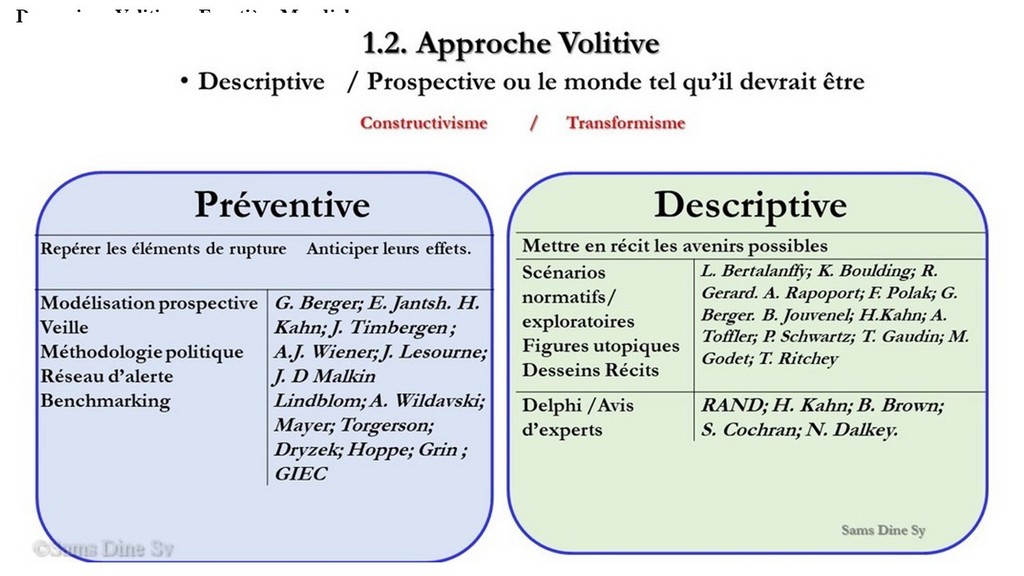
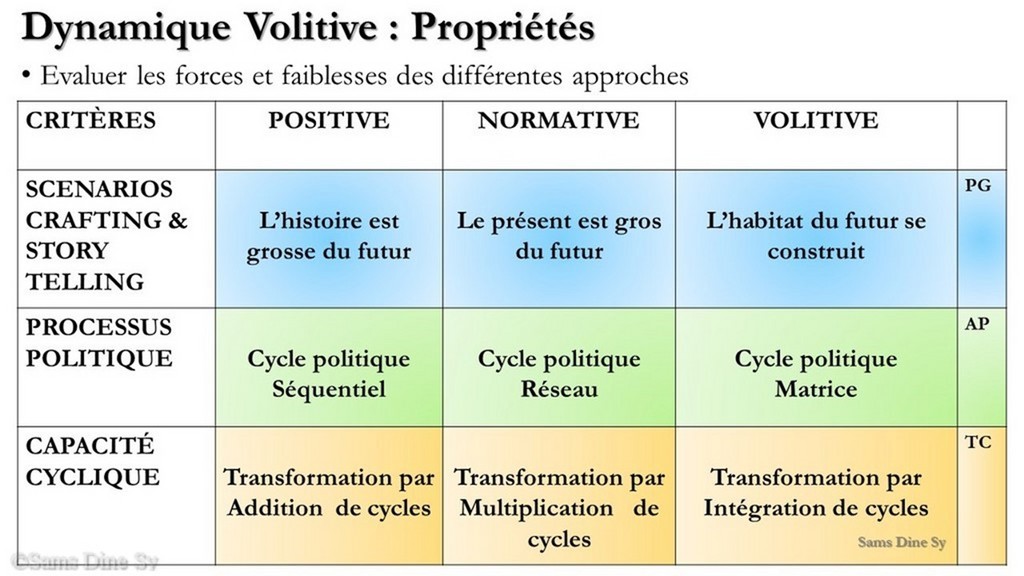
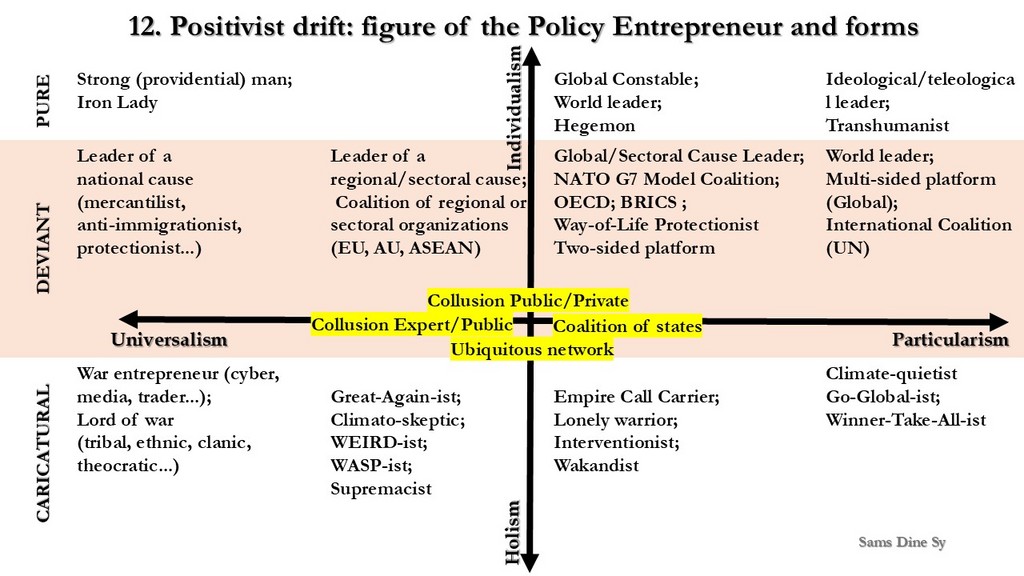
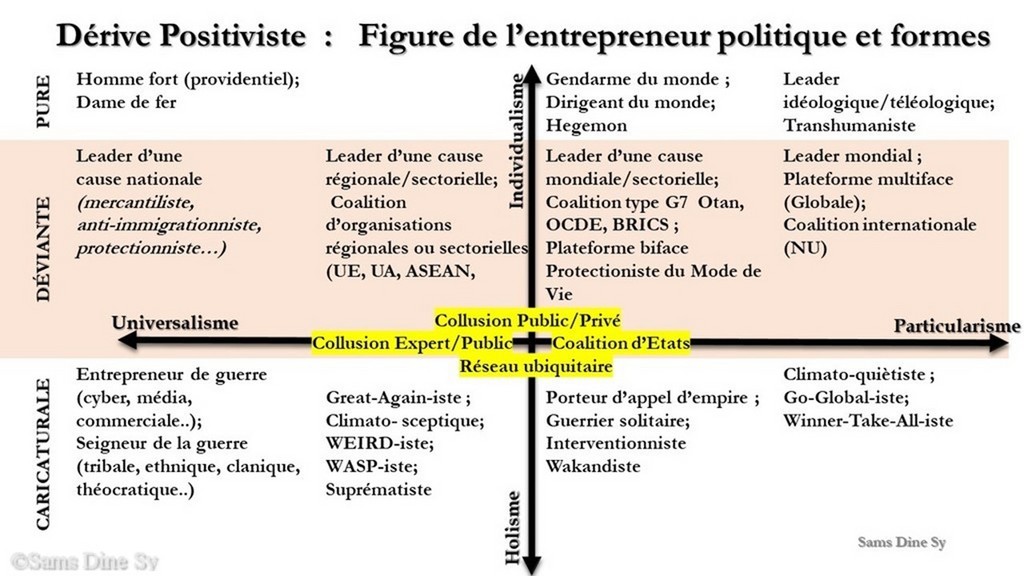
- 3. Distance Science : Paradigms - 3 Clusters
- - Methodology : Exploratory
- - Epistemology : Constructivist
- - Ontology :Transformative :
- 4. Other bibliographical references /3 Clusters
- - Prospective:Trendometrics
- - Prospective:Uncertainties ; Scenarios
- - Constructive :Stake; Player; Vision
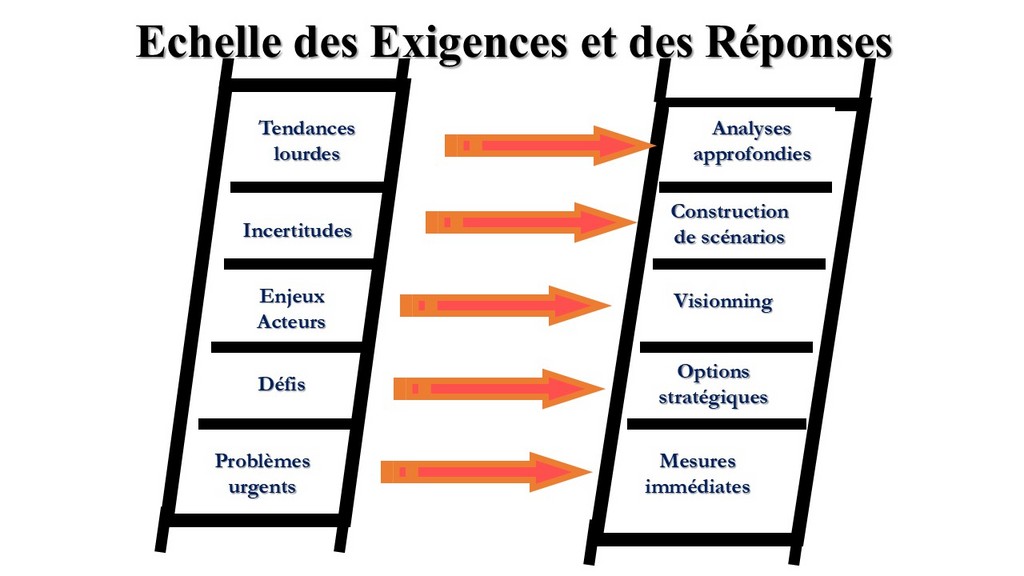
- - Transformative:Challenges; Options; Urgents
.
Abstract ; Key Worlds/Proxy ; Summary
Sams Dine Sy* 12/10/2025
The submission of the other UN member states to a dual regime of absolute domination by Hegemon and systemic dependence on the other members of the Security Council is put to the test by a tectonic (bio)nic plate when the former is converted into "Homo Scientificus Divinus" to go back to the beginning of scientific and technical reflection to the Ionian school (~585) which claims to be at the origin of knowledge and wisdom. In the meantime, prospective science puts everyone in their place once the twentieth century has been identified as a break in the scientific giga-trend with multi-millennial stagnation.
The UN80 Initiative does not serve any more than so many other reports and "blueprints" as a compass to navigate between several scenarios, the most visible of which can be summarized as "atrophy of the UN; a crash landing of the American economy". The adoption of a regime or Homo Scientificus Democraticus from the renewed UN is no longer to be excluded once all the bearers of the call for empire have been brought to their senses, avoiding taking refuge behind the pretext of a "war against democracy". The political culture will do the rest with the Security Council replaced by a group of wise men with a temporary mandate, serving just as an example. All the staff of the UN system, entirely retrained in Policy Analysis Science in particular, promote the calibration of democracy performative qualities around prospective, constructive and transformative science.
Maddison/Science ; Worlde-Africa ; Wild Cards ; Crypto-Quantum ; Mdgs ; Sdgs ; Degd ; Undp ; Idep ; Uneca ; Unesco ; World Bank ; Ilo ; Unido ; Acbf
Summary Introduction 1. United by war or positive science 1.1. War on science and multimillennial stagnation 1.2. XXth century: break in trend 2. United to Deliver or Normative Science 2.1. Navigating without a compass 2.2. Delivering in a vacuum 3. United by democracy or prospective science 3.1. Homo scientificus democraticus exists. I met him! 3.2. Calibrating the performative qualities of democracy Conclusion Appendices | Tables 1. Regime : typology Table 2. UN80 Initiative 2.1. Objectives and areas of action 2.2. UN80 initiative in relation to the Oecd/Dac Glossary and the "Qualities"or Standards for the evaluation of any public policy or action 3. 4 UN scenarios 4. Trends affecting the government according to two types of methodologies: normative (Gao) and exploratory 5. Performative qualities of democracy : overviewConclusion Annexes |
Introduction
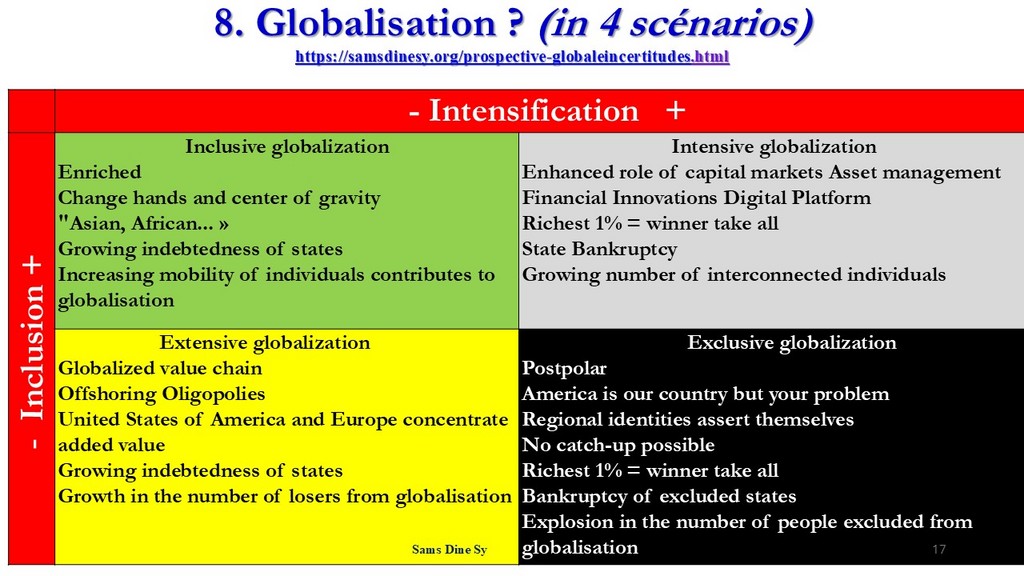
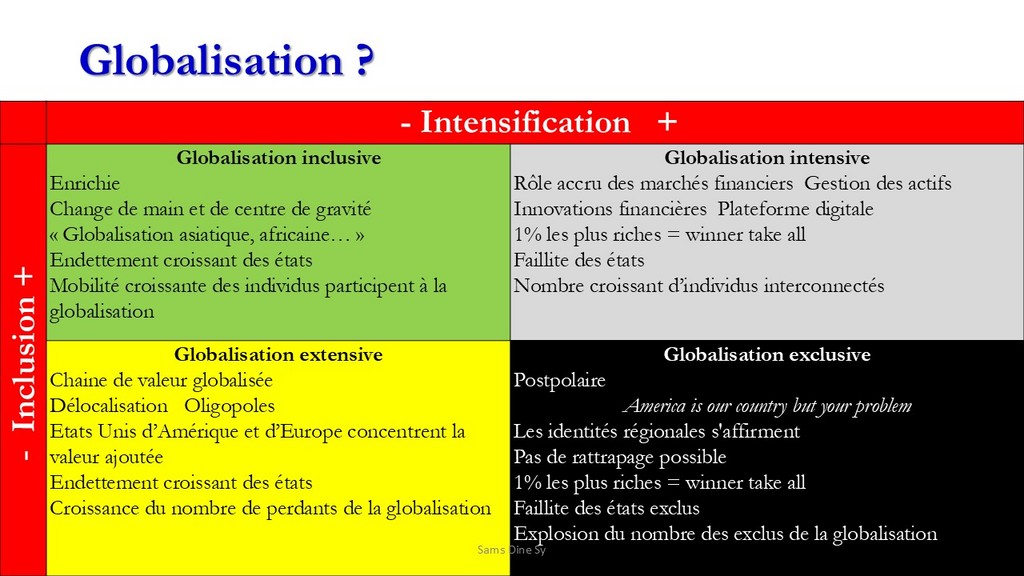
The United Nations has just celebrated the 80th anniversary with this warning: "Eight decades later, a direct link can be made between the creation of the United Nations and the prevention of a third world war." But not war!3 Secretary General A. Guterres might have added. This is no doubt why, at the turn of the 2000s, "... The Role of the United Nations in the Twenty-First Century" is the subject of intense reflection, in particular in the face of "all these challenges" summed up in one word by the Annan Report: globalization. "We the Peoples:... " does not, however, make any reference to its multiple forms. Especially not the first or exclusive one at the origin of all wars for several millennia. Nor to the second or intensive that legalize them when the Charter makes no reference to democracy as the founding principle of a regime that excludes any form of domination or dependence. "Delivering as One" (DaO, 2006) and its independent evaluation (DaO, 2012) enshrine the intensive form of globalization with the help of a normative theory based on a top-down approach popularized by the OECD/DAC (Organisation for Economic Co-operation and Development/Development Assistance Committee) glossary. and "United to Deliver: UN80 Initiative United Nations Action Plan For Member State distribution (7 November 2025). A document defined as a UFO, being neither a policy nor an exhaustive "blueprint", it nevertheless propels its targets into the world of foresight, well beyond 2.0. A new type of "tectonic plate" or a bionic culture ?
This is how the UN is taking the "royal way" of normative methodology. However, he does not assume to be part of the intensive form of globalization since "homo scientificus americanus" (J. McK Cattell. Science NS 17 (1903): 561-570. 1903) supplanted "Europeanus", imposed a regime of absolute domination through shocks, crises, bubbles and wars to the point of wanting to program the equivalent of a "bio (tecto) nic plate" in the second quarter of a century. In defiance of the principles of the Charter, the appetites of "bearers of the appeal of empire", especially members of the Security Council (UNSC), will make several others coexist: dependence, accumulation, cohabitation, interdependence, benign neglect, triple belt, bionic transformation... The important thing is to be part of the "winner-take-all" and "starve the beast" logic.
Why in 2025, the UN is once again claiming to "change paradigms" in the implementation of its mandate via "United to Deliver"? If it is to prove that the UNSC is "a matter of hegemonies or empires", that is it. On the other hand, if it is to open a discreet door to a new regime, then the UN becomes the ideal unit of analysis for prospective science, which has made immense progress since the last "war of paradigms" at the end of which a new "Deep Core" based on exploratory methodology supplants positive science which justifies all wars and normative science which aspires to a status other than that of "protective crown" since a "Norms of Norms" type decree tries to restore on May 23, 2025 the reference science (Gold Standard Science) which locks the UN into a regime of absolute domination.
The UN80 Initiative is directly challenged. Why not send a strong signal of a shift towards a new regime (homo scientificus democraticus?) instead of remaining another confused noise of the "united to deliver" kind as it has been for two decades? Answering this question requires a critical examination of the way in which positive science gives birth to the UN before normative science turns it into a Trojan horse, opens the door to prospective science, to anticipate ruptures and finally, through the Organization, to help member countries to do the same.
1. United by war or positive science
Reconstructing the scenario of global evolution for more than two millennia still remains a taboo subject, if not impossible. However, it is a necessary step to understand the inextricable links between science, the only giga trend, and war, its main wild card, from which the hypothesis of a multi-millennial stagnation stems like an invariant.
A still timid effort has discreetly opened the door since the publication of two series of exercises by A. Maddison, limited to the economic dimension until the year 1000 and then until the year 1 (The World Economy. A Millennial Perspective", Oxford, 2001; University of Groningen 2007). This effort is called into question by criticisms of the validity of the approach (S. Amin (2001) and the reliability of the data (G. Clark 2010). The controversy is essentially about the standard of living between different regions of the world (SD Sy . Should we imitate the American model? 2003). However, it underestimates the role of science, which is limited to its spillovers or technological benefits. It does not go back to the beginning of scientific and technical thinking in the Ionian school (~585) which claims to be the origin of knowledge and wisdom. It underestimates the importance of war and slavery in episodes of economic growth and in the advent of two forms of globalization, either European or exclusive, then American or intensive. This debate nevertheless makes more and more robust the hypothesis of stagnation that is reflected in the attempts to reconstruct the scenario of world evolution in a multi-millennial perspective. History is also put to the test by prospective science. What if the twentieth century was only a summary of this evolution through the vicissitudes of the UN? A brief look back allows us to see more clearly.
1.2. Twentieth century: break in trend
After two world wars in 1945, 49 countries agreed to sign the Charter creating the UN in order to prevent a third. A birth in pain, also celebrated with atomic bombs. The baptismal name "We the Peoples" simply aims to consecrate a new regime of absolute domination by the USA. Was this the price to pay to get out the front door of this century of violence and terror with a traumatic toll of 165 million victims? In any case, this regime excluded all other countries, starting with the Axis powers (Germany, Italy, Japan, Hungary, Bulgaria, Romania) from the status of an empire nation. The Allies (United Kingdom, Soviet Union, China, France), all defeated, were nevertheless rehabilitated within the Security Council but assigned to a regime of systemic dependence through the Marshall Plan. This status, contested by the Soviet Union, triggered the Cold War between East and West, dragging 144 other countries into one or the other regime before the end of the twentieth century. The division into two blocks does the rest. As well as the flagrant failure between 1960 and 1990 of more than fifty "United Nations International Decades", including four for "Development" when, in the 1990s, more than a billion people were still living below the poverty line.
The notion of regime used here refers neither to the common sense of the predicate type (food, matrimonial, etc.), nor to that of paradigms, in particular to the political epistemology relating to the type of state (Westphalian, Jacobin, presidential, parliamentary, etc.), to the attributes of sovereignty (monetary, military, fiscal, cyber, etc.), and even less to its confessional ethnolinguistic variant or epistocracy. The regime as defined here is a forward-looking attitude when it anticipates and if not, "anything but prospective". For example, in the first case, the UN adopts a regime of the "interdependence" or "peaceful coexistence" type, anticipating shocks and crises, including "tectonic plates" in the literal and figurative sense of the term. Otherwise, all UN members are doubly subject to a regime of absolute domination and systemic dependence on the United States and the UNSC, regardless of their relative or structural variant. (Table 1)
The dual regime — absolute domination and systemic dependence — makes the United Nations a challenge, not a player capable of meeting challenges as well. The paradox is that the organization is nevertheless authorized in 2000 to raise the issue of "globalization" presented as a striking feature of the twenty-first century. A subtle way of reducing it to a single form, of obscuring the previous one and of celebrating the new one. The intensive or American, symbol of his status as Hegemon, would therefore replace the exclusive or European at the origin of so much violence and terror for more than 2 millennia.

2. United for Action or Normative Science

2.1. Navigating without a compass
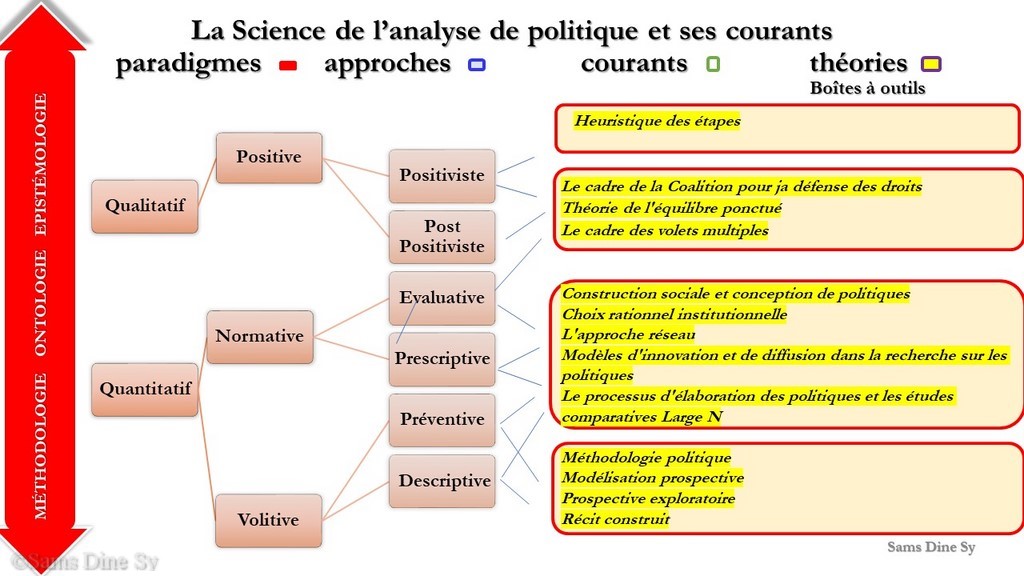
At the turn of the 2000s, the role of the United Nations in the twenty-first century was at the heart of intense reflection, particularly in the face of "all these challenges" summed up in one word by the Annan Report: globalization. This is how the "UN Millennium Declaration" adopted at the plenary session of 09/08/2000 reduces it to a single form. This approach reveals how difficult it is to adopt a forward-looking approach.
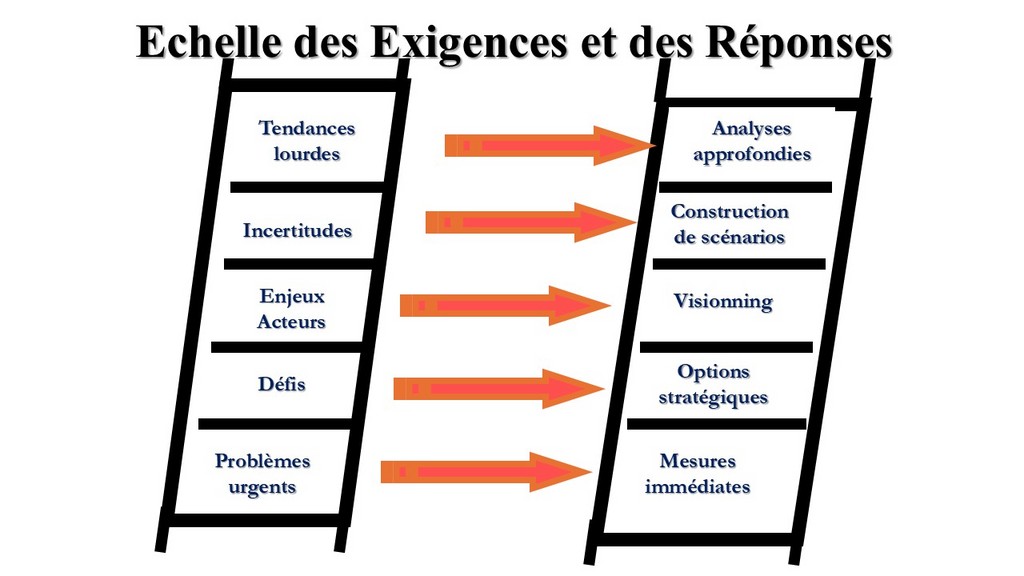
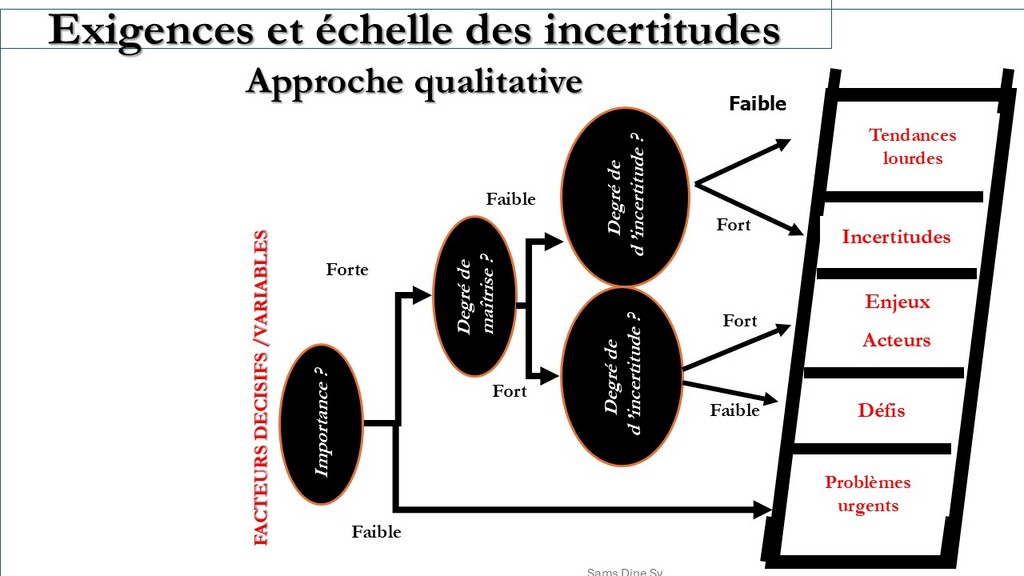
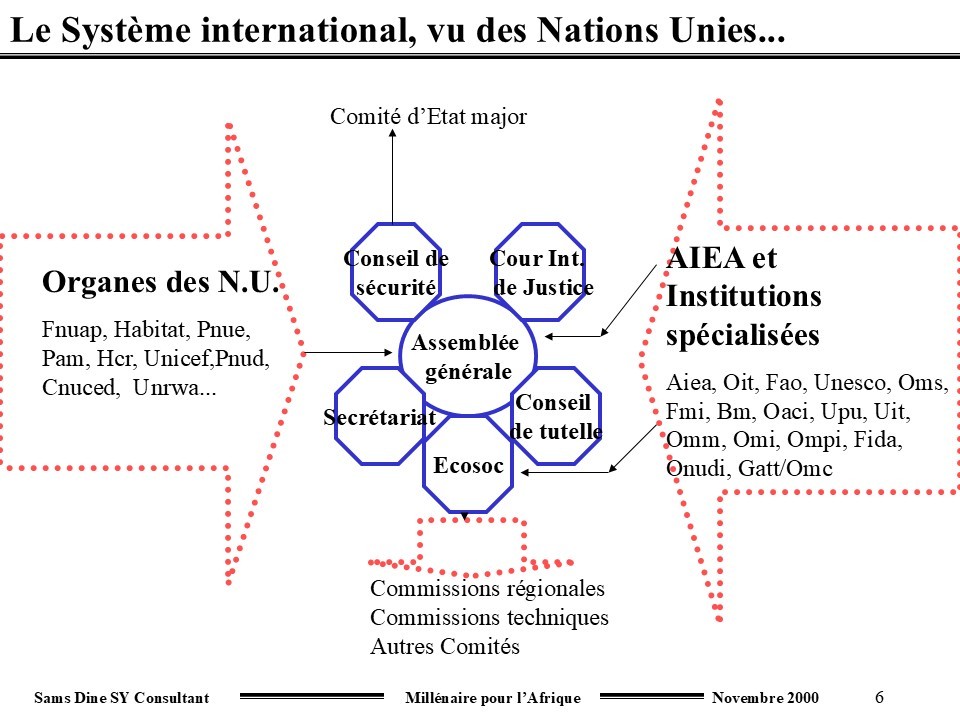
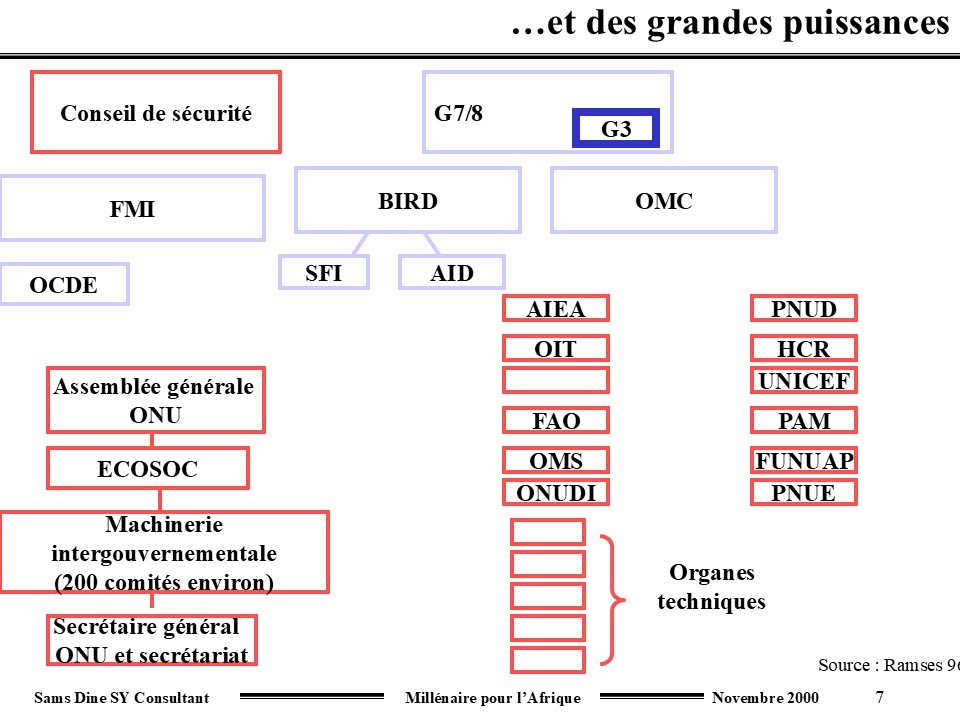
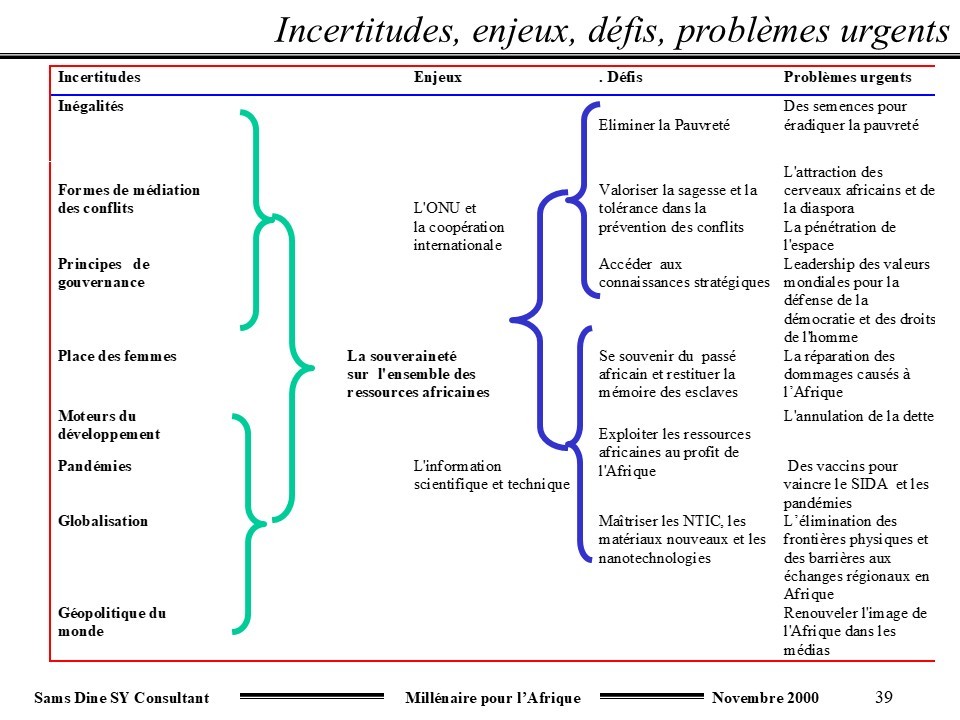
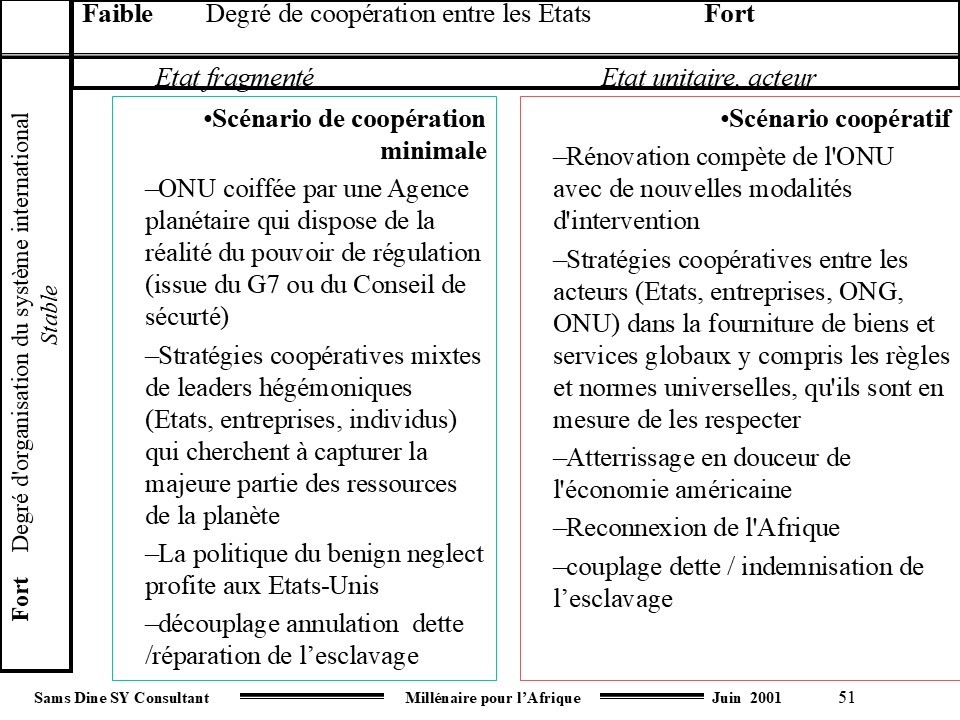
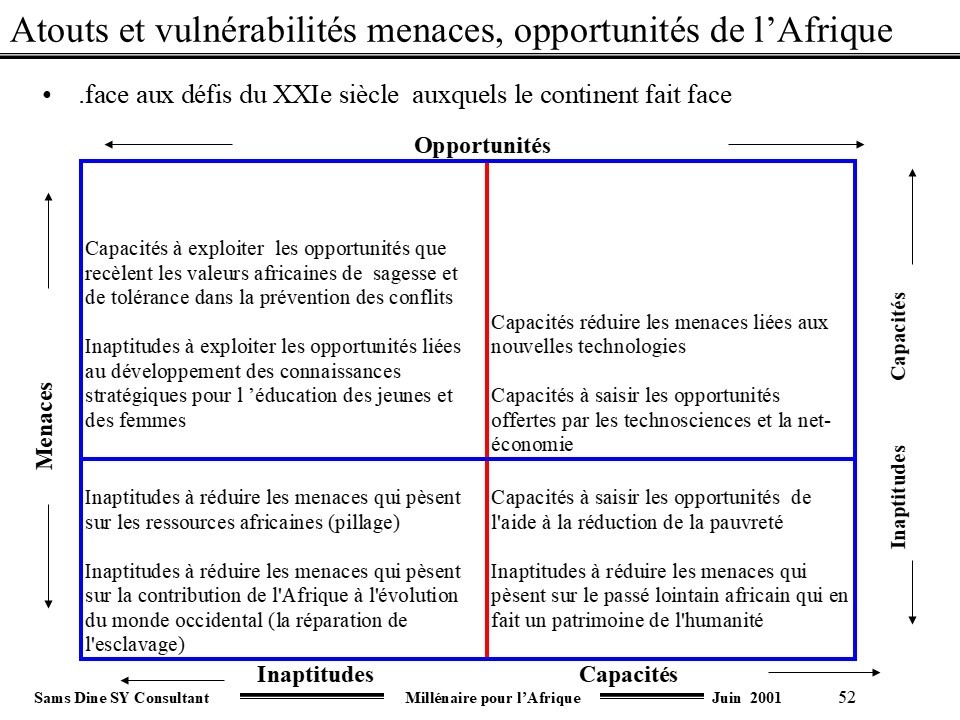
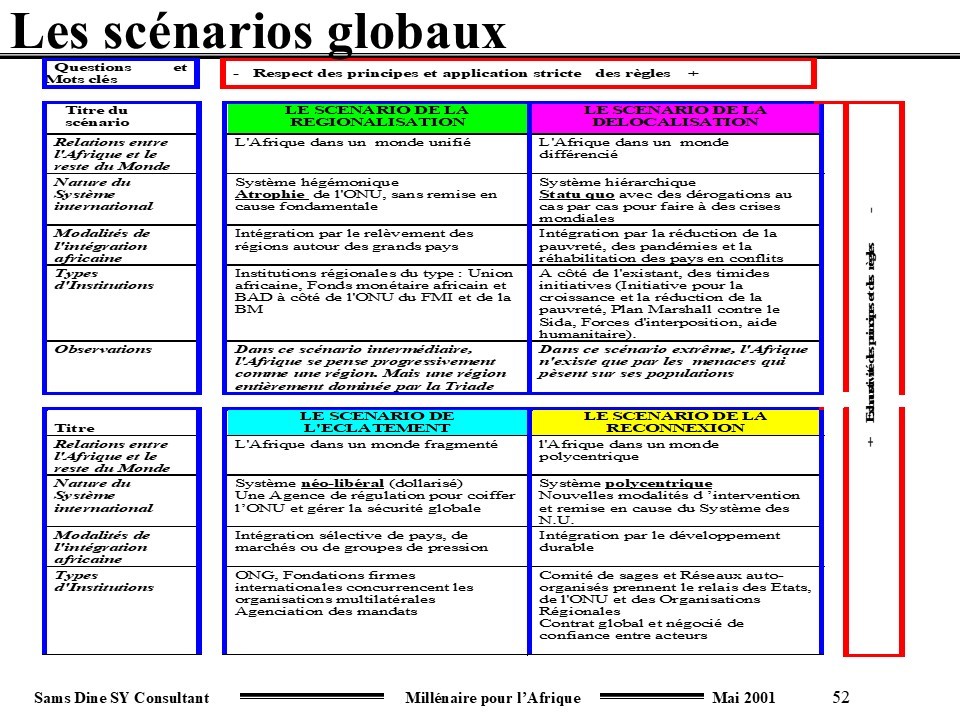
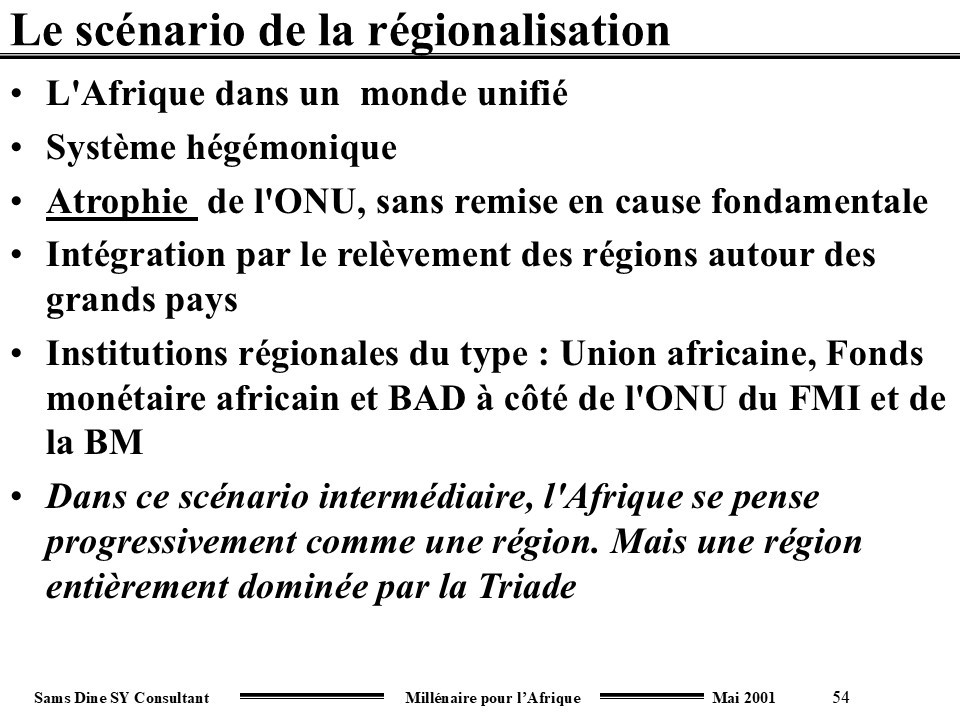
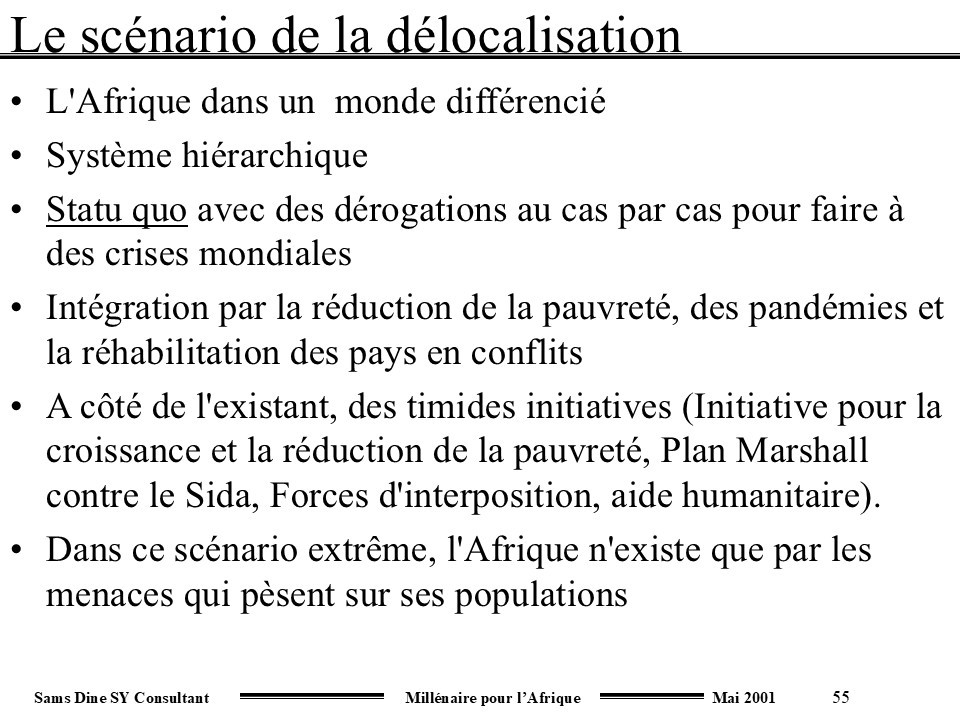
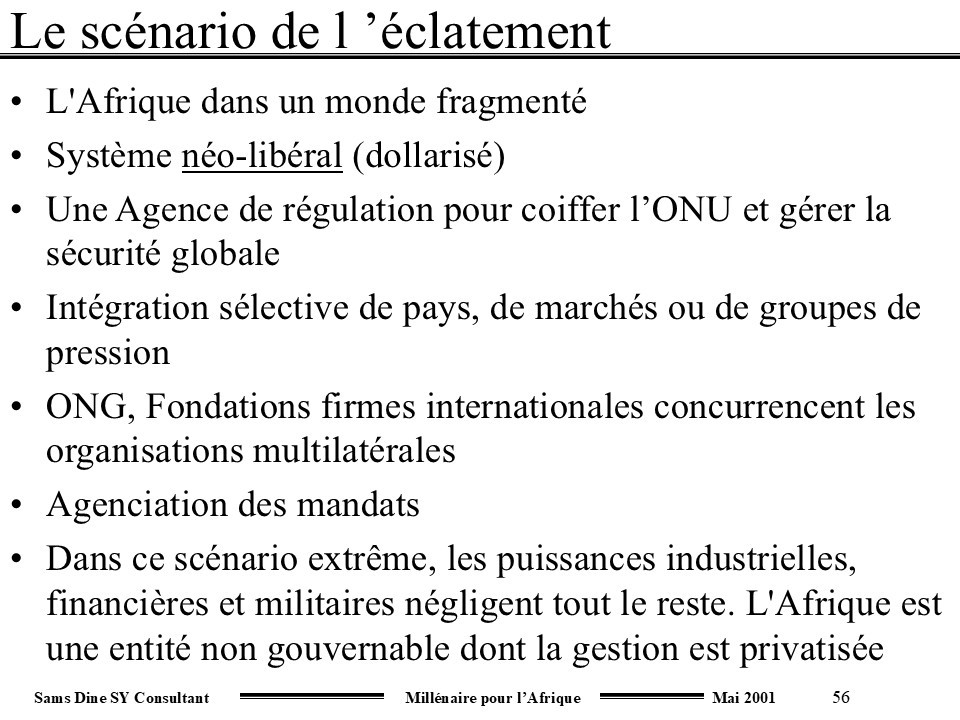
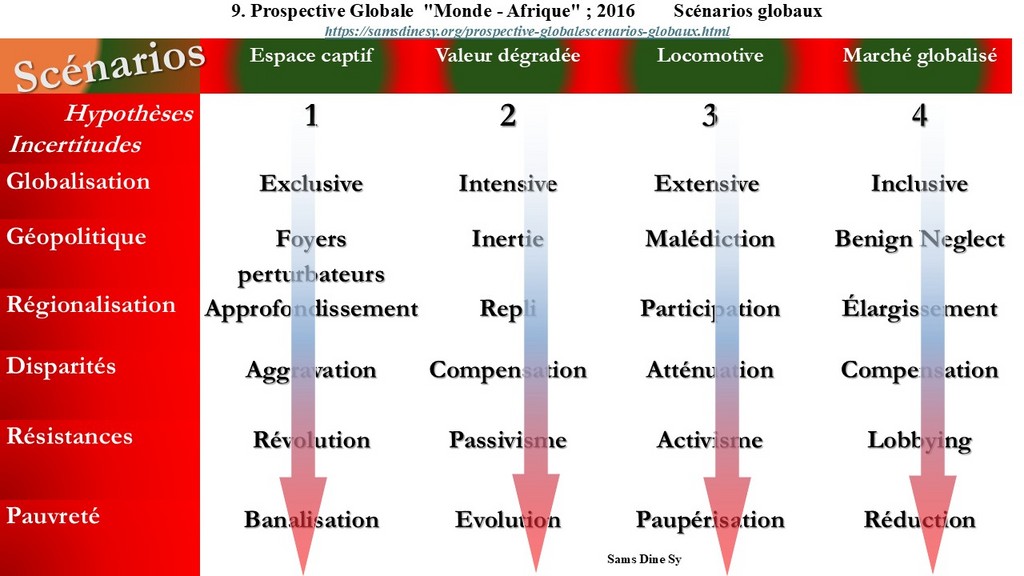
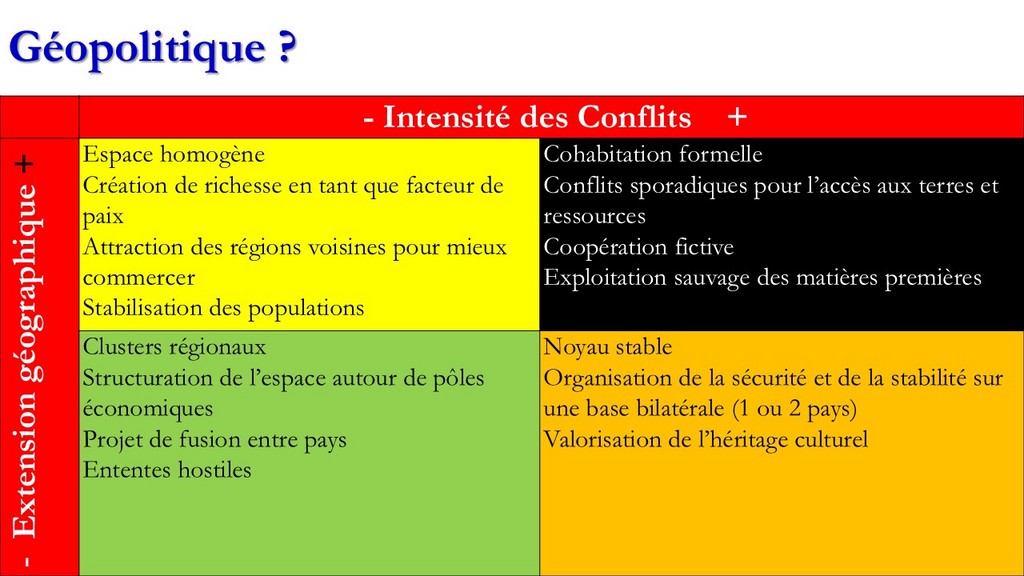
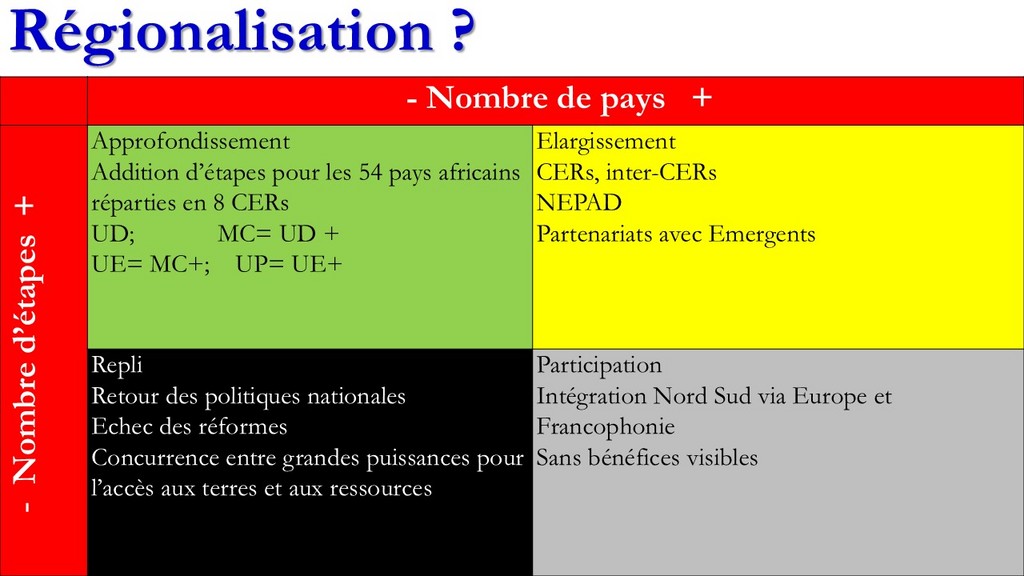
However, other contributions to the Millennium Summit had, as early as the year 2000, placed the world and the international system on a scale of uncertainties and responses (Table 3) on the horizon of a century, locating the UN in 4 scenarios with a view to anticipating a twenty-first century that is shaping up to be full of ruptures in the 90s. Scenarios that are simply "crafted" and without "story telling" given a high time constraint (15 days for each of them).
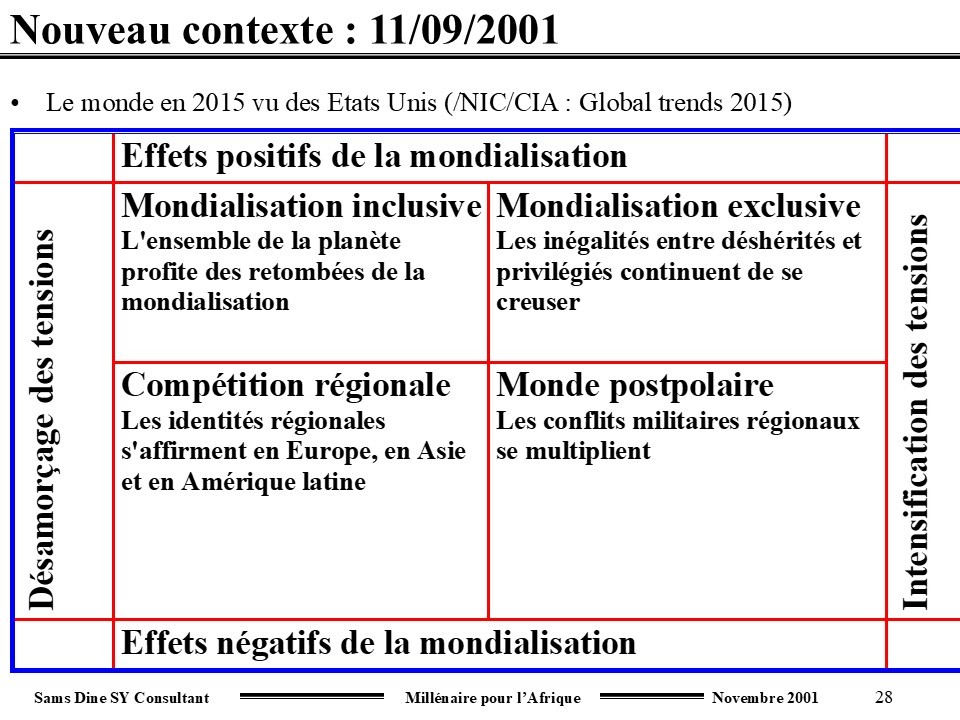
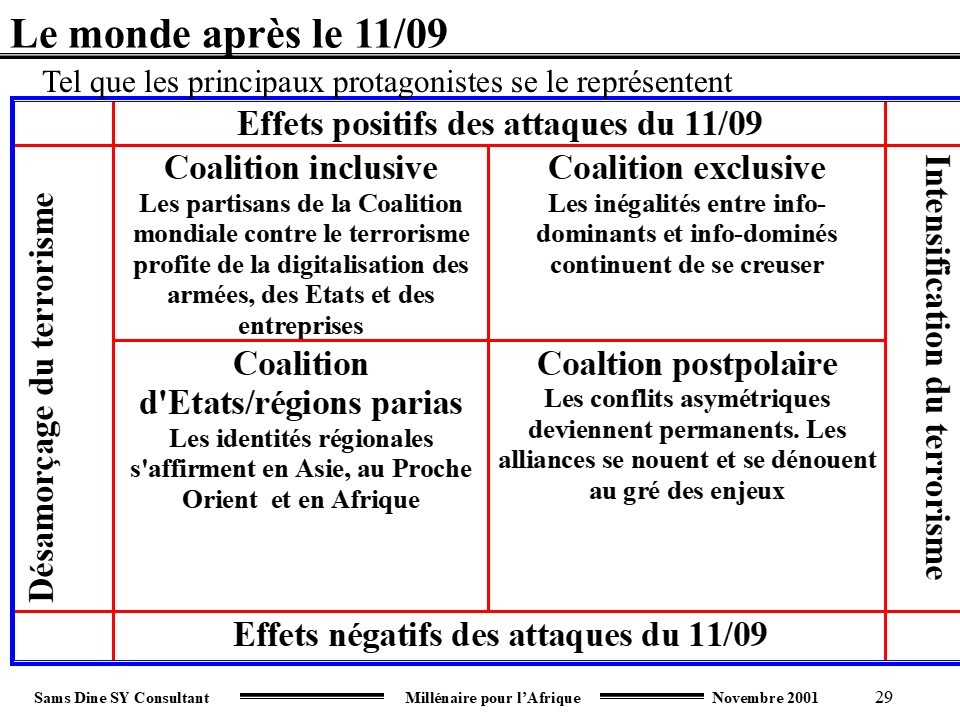
In the meantime, the world is confronted from the United States with a series of shocks, bubbles and crises, including those provoked at the beginning of the twenty-first century, by the attack of 09/11/2001 described as "against democracy". An attack that shook his status as a Hegemon, reinforced by the end of the Cold War. We know what happened next: to avoid the collapse of the dollar, the main stock markets suspended all activity for a whole week and transferred market power to the United States. The rest of the world, described as the "axis of evil", was nevertheless plunged into war, against terrorism in particular, for two decades. The very great recession following the subprime crisis did the rest in 2008. Europe, the main victim, sees its project for an international euro currency in a state of lethargy. Meanwhile, other bubbles still arise in the federal state before invading the planet. The art of "fomenting reproducible revolutions" restores Hegemon's status, reducing the crisis to "benign neglect". The way to the Digital Generation is opening up with Dot.Com, Second Life, Culture Cloud and the race to become the world's first billionaire.
While the rest of the planet is laboriously getting up to speed, another bubble is announced "Artificial Intelligence" as a precursor to the equivalent of a "Bio (Tecto)nic Plate" fomented from the Crypto-Quantum and carrying a clear message: Homo Scientificus Americanus (1903) will be Divinus to the point of programming the obsolescence of this entire world economy in a state of multimillennial stagnation since the irruption of the Ionian school (~585).
Nevertheless, Hegemon's state of health was the subject of multiple warnings, considered ill-prepared in the event of a new world war, on the verge of budgetary bankruptcy. A simple coincidence with that of UN80, which also sounds the state of emergency summed up in a few sentences: faced with a risk of budgetary "bankruptcy"; call for a "leap forward"; ambition to transform the organization from within.
After a quarter of a century, "atrophy of the UN without fundamental questioning" seems to be the hypothesis that makes the "uncooperative" scenario the most visible, especially when it is associated with another: " disaster landing of the American economy" omnipresent in a context haunted by a 3rd World War.
Also, the reaction of this key player during UN80 is a source of misunderstanding when he "decides" on his own to have the Organization headed by an autonomous unit. As if he were trying to revive from his ashes - a few months after his triumphant installation - this Doge violently expelled in 2025 following an alert reducing him to a "triple trap" that plunged the USA into the "fatal error". Unless we see it as a counter-offensive by interest groups that have seized all the attributes of this country's sovereignty, in the face of a whole series of threats - Crypto-Quantum for example - that program their obsolescence. Budgetary blackmail is only the visible face. At this stage, the General Secretariat is taking the shock (on the verge of bankruptcy!), the other members of the UN CS are looking the other way, not being willing to make up the budget deficit resulting from this weapon of American domination. Like most other member countries, they are trying to "preserve the status quo" while the General Secretariat is trying to cover all these people by taking refuge behind "paradigm shift: united to deliver!", "structural, systemic change". Something already heard in 2006 (delivering as one). A notion that remains vague in the absence of reference to the old and new paradigms, especially in the absence of precise indications on the methodology for defining ontology and epistemology. However, the basic information needed to locate the UN in this framework of reflection is accessible to all.
Embarrassed by the complexity of the situation, UN and Hegemon crossed their gaze on the first scenario (atrophy, crash landing of the American economy) and the third (capping and soft landing). The rest of the world, including the other members of the Security Council, are no longer able to find their way around. But then why not the fourth (complete renovation of the UN) or the second (preservation of the status quo)? Fear of the future does the rest. The "Tower of Confusion" is not far away. Prospective science is helpless in the face of such a high level of radical uncertainty.
It is as if the UN did not anticipate the first "atrophy" scenario, whereas as early as 2001 several signals made it more visible than the others. Or the forward-looking culture is completely deficient within the UN. This is unacceptable in view of all the investments made to deploy the capacities of policy analysis and foresight. We might as well declare obsolete all the "intergovernmental machinery or bureaucracy" omnipresent in the organization's organizational chart. Either the UN is entirely at the service of the regime of absolute domination by Hegemon, whose economy - still in this scenario - is in a situation of a crash landing, even if for the interest groups that have confiscated all its attributes of sovereignty, it is only a question of "benign neglect", the essential thing being a "UN capped". What if the other members were in fact reduced to the status of virtual states?
2.2. Delivering in a vacuum
The most evocative sign is the UN80 report presented on September 15 2025 with the aim of ensuring that the UN system serves the "people of the United Nations" in a more coherent, effective and accountable way. This time the "paradigm shift" is envisaged concretely "in the areas of peace and security, humanitarian action, sustainable development and human rights". From the already read from the Charter to DaO 2012, including "We the Peoples" and so many other incentives or programs.
This limitation alone explains the monumental error of wanting to enter a new "Gold Standard" of reference science behind "Norms of Norms (NoN)". The incessant use of chameleon-like concepts of "structural change" further undermines the initiative, as if it were completely unaware that it was the organization itself that introduced it from UNECA in the 1980s to "soften" the harmful effects of structural adjustment programs, before abandoning it in favor of "structural transformation" (A. Adedeji: Interaction between structuralism, structural adjustment and security policies in the management of development policies, Ecdpm, 1989). Without however delving into such a complex question at the heart of transformative science, the 3rd dimension of prospective science after constructive science.
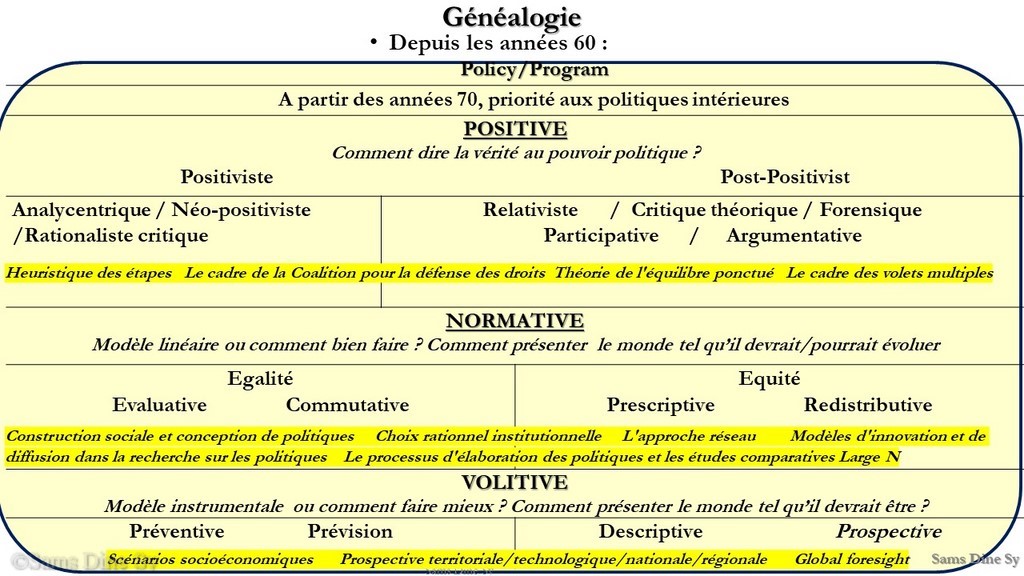
The responsibility of both the academic world (Hks) as well as the one at the origin of Gagas (Gao) is also committed. The First, C. Robert, R. Zeckhauser, The Methodology of Normative Policy Analysis, 2010, Harvard, Kennedy School) promotes within the temple of Policy Analysis Science, normative methodology – an oxymoron – to the rank of a deep core, in the ignorance that it has never been anything other than the protected crown of the positive approach, whose sophistry had nevertheless been denounced even by "the only prophet that England has had and whose message has long remained misunderstood" (K. Raine in science and imagination in W. Blake; Science and Consciousness: the two readings of the universe; Stock, 1980). In ignorance of the scope and limits of the "royal way of the normative approach: System Model (System Models for Policy Analysis" Warren E. Walker and C. Els van Daalen) or Program Therory (Chen, H.T. 1990. Theory-Driven Evaluations. Sage). It thus propagates an approach without taking into account the limits, in the absence of a model and/or data immediately taken up in other sciences, including climate physics, enshrining the SDGs and well beyond "making nature a capital" (Dasgupta Review, February 2021) popularized by both the United Nations (Ipbs) and the OECD (Pure Iasa).
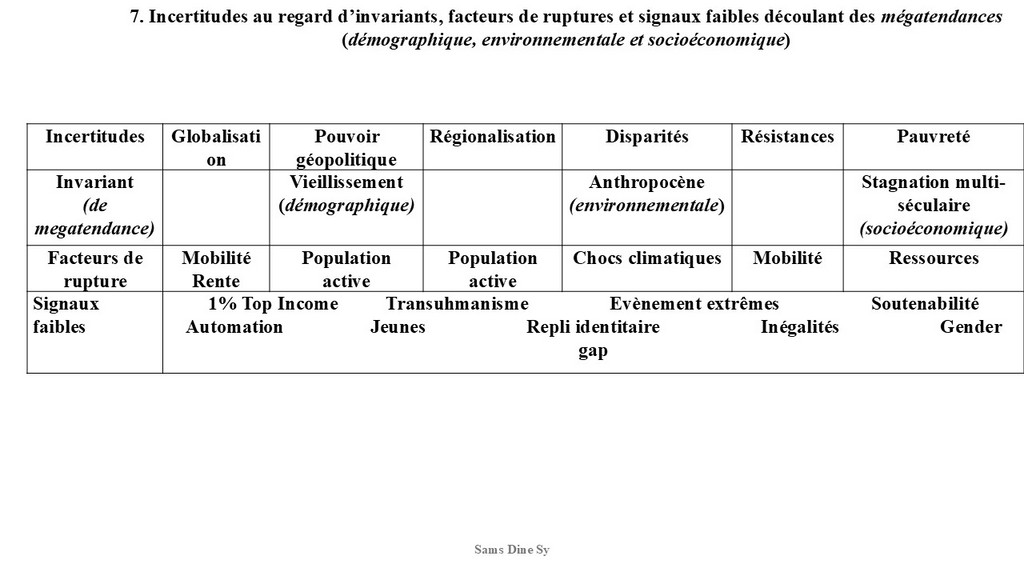
The second (Gao : Table 4) refers to strategic foresight to explore trends affecting government and society to mix them all at a single level of scale instead of separating at least what is radical megatrends/uncertainties and issues/challenges. An approximate diagnosis from which first and second type errors arise on the extent of Hegemon's risk of bankruptcy when he only projects it in 2048 if the debt exceeds 200% of GDP, while so many signals make it visible now. Can the UN80 Initiative save the US before it's too late?
So many approximations reduce the UN to a stake, betray the absence of a sufficiently robust vision to navigate in a century full of radical uncertainties heralding a millennium that breaks with the previous ones. It is not surprising that attempts to provide it with a sufficient capacity to absorb prospective science are always ignored or even blocked. It is out of the question to make it a major player and therefore an existential threat to the regime of absolute domination in force. Let it therefore be content to be “United to Deliver”, preferably in a vacuum. The confusion between quality indicators and the objective of public action does the rest.

3. United by democracy or prospective science

The single UN80 agenda should focus on the criterion for eligibility for the UNSC: to be a reference in terms of democracy. Its enlargement could at most be justified during the Cold War around representatives of 3 groups: East, West, 77. All those who are still calling for a seat fall into the trap of the current regime of absolute domination that excludes any form of renewal of the UN, even if it means plunging the organization into atrophy.
It remains to be specified what are the performative qualities required and how to calibrate them.
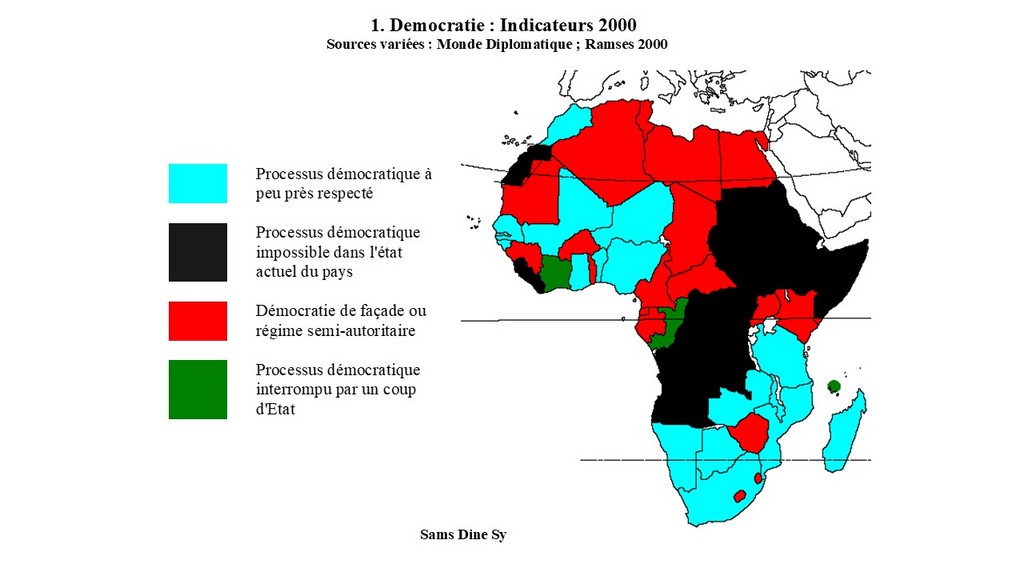
As far as qualities are concerned, it is necessary to draw lessons from the African experience in this area. The continent has served as a laboratory before the others since the year 2000. The result of the exercise shocked the members of the Independent Commission who considered it too severe for the continent, especially for one country (Algeria) and those who considered it not severe enough for the continent and another country (Nigeria).
At the end of an intense controversy, the consensus was established: to leave the map on the state of democracy in Africa as it is, to disseminate it everywhere in the hope of provoking other even more intense wars of paradigms forcing the UN to deepen the subject with a view to a consensual calibration of the performative qualities of all members. Less than a decade later, this experiment has been taken up by several think tanks in a somewhat mechanical way to strengthen the current regime of domination and its allies.
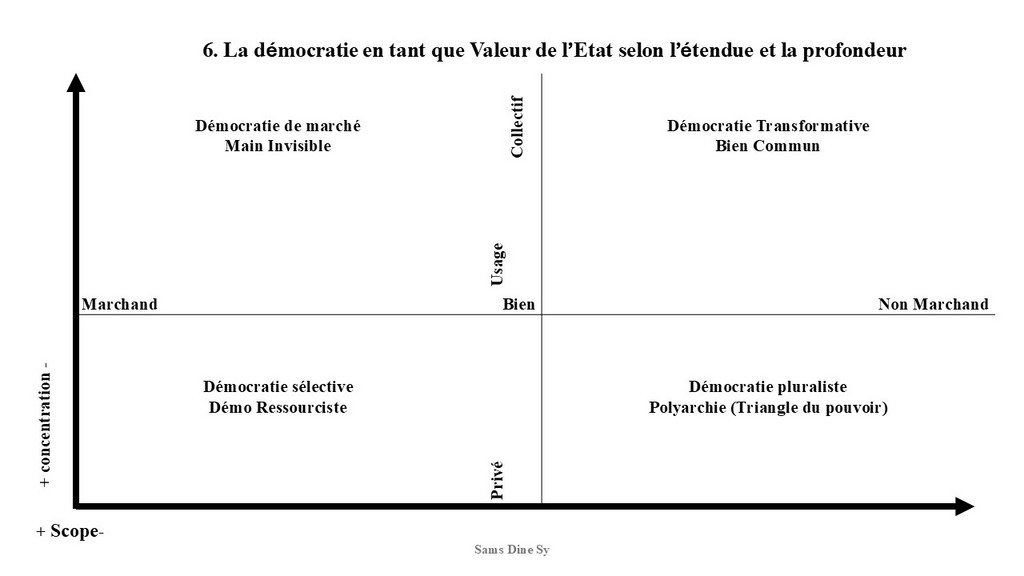
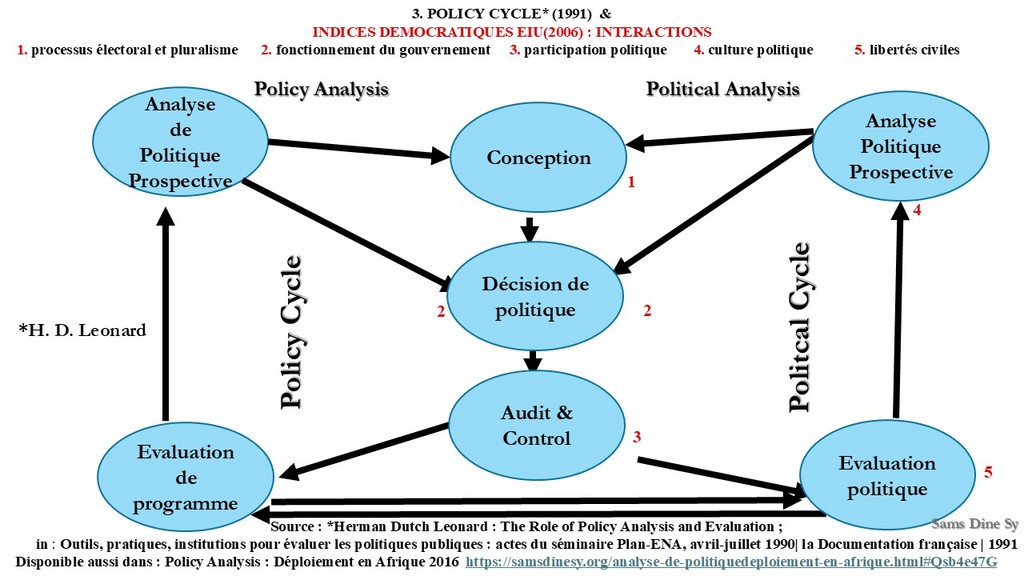
In the meantime, progress in Policy Analysis Science allows us to deepen the subject and put all member countries on the same starting line. Democracy is not limited to the electoral cycle, which is the preferred field of political entrepreneurs. The notions of the policy cycle, transformation cycle, and their articulation are also at the heart of the democratic regime, which is robust enough to anticipate ruptures and impose it until the last mile. The important thing to be a member of the UNSC would then be to serve as an example to others. Temporary because there should no longer be any question of being permanent. In short, more a Council of Elders than of bearers of the appeal of empire. The immediate consequence of this new regime will also be to force anyone in the service of the UN to retrain in this science in order to remain in activity. Above all, to proclaim aloud, once all the theoretical and conceptual apparatus has been mastered: Homo Scientificus Democraticus Exists. I met him!
3.2. Calibrating the performative qualities of democracy
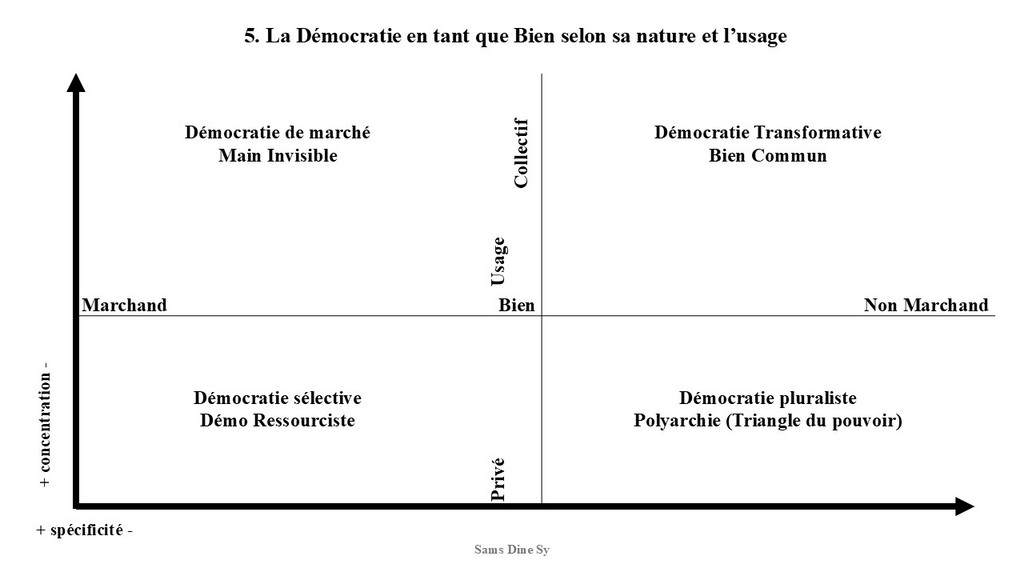
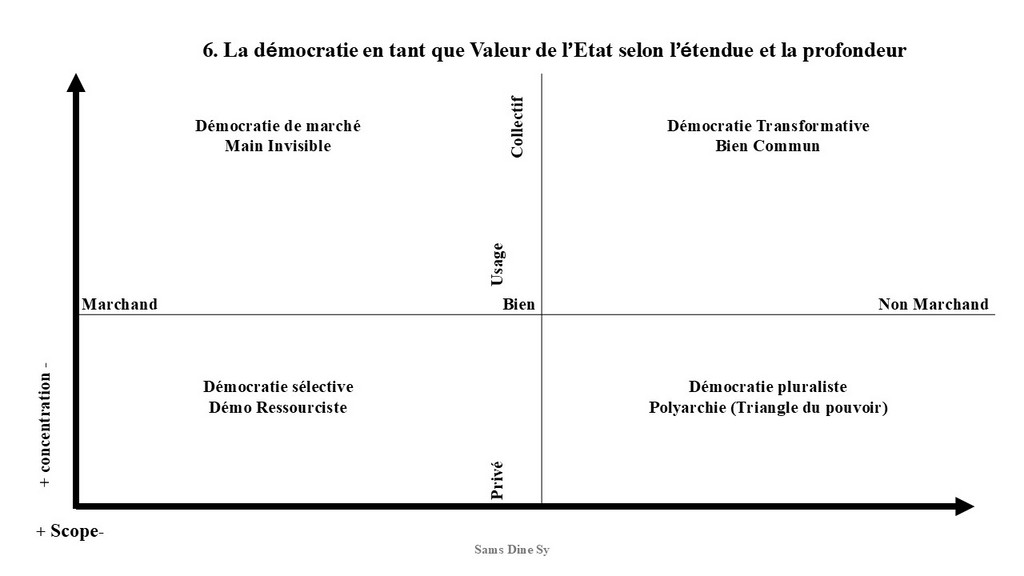
Benchmarking (Table 5) requires a comprehensive survey of democracy in all countries followed by a deepening of the conceptual framework.
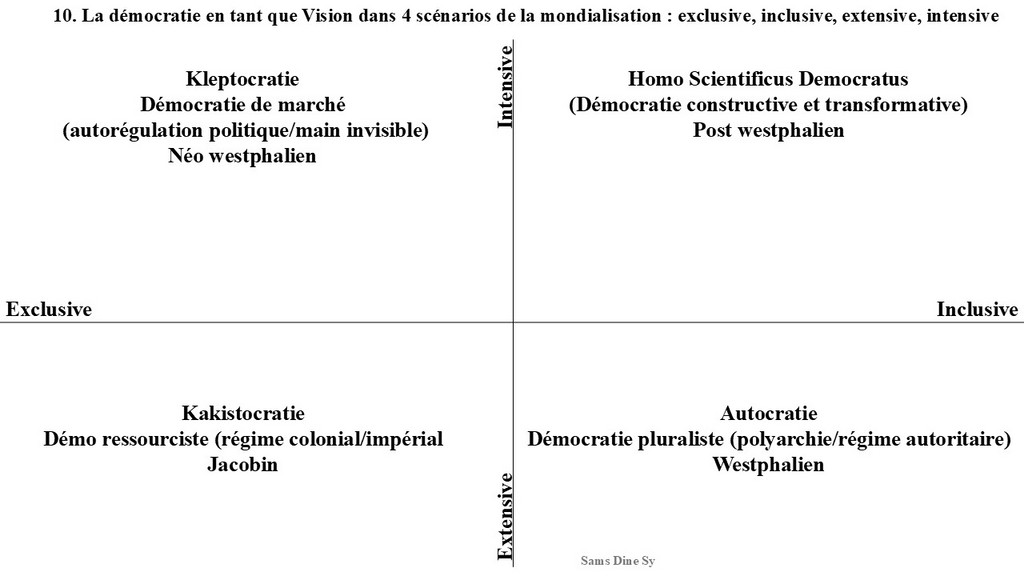
The risk of such a survey should not be underestimated when so many countries used to serving as a reference find themselves at the same level as the others when they are at most in one of these categories: market democracy, epistocracy, autocracy, polyarchy... They would be tempted to invoke once again the "war against democracy" argument. The fascination exerted on them by "homo scientificus divinus" will do the rest as long as its "cameralist science" version still remains at the origin of the Westphalian state in force everywhere. Including in its neo and Jacobin version.
This pastiche can undoubtedly help limit the risk. Any resemblance to existing characters would be purely coincidental. Everyone will recognize their own.
Transformative science features Baron Amer (Bam), Marechal-Nous-Voilà (MnV) and Der Rosenkavalier nicknamed Octavianping (RkPing) who each embody a form of globalization with the exception of inclusive.
His favorite Rosenkavalier, nicknamed Octavianping, who had disguised himself as a cleaning lady to go unnoticed, reappears and is entrusted with the mission of spreading the message of the Bam. He then went to Afrika but once there, the riches of the continent dazzled him to such an extent that he decided to settle there for good, implanting Shen Zen connected by Obor everywhere. His activism arouses the anger of the Bam, who takes out the sword. RkPing is taking advantage of the duel to assert all its power as a lender and market, which makes it a tiger of globalization. Humiliated by so much arrogance, Bam decides to regain control of the "Strategic Center" while accelerating the pivot to the Indo-Pacific, to expand his border to the South Mediterranean and to punish the old aunt who endangers his global influence behind the Aukus affair.
These initiatives awaken from its torpor the bear, cousin of the winged tiger RkPing, whose glacis has been diluted in Europe since the fall of the Soviet Empire and which in turn embarks on the restitution of its heritage before the new border of the world is effective. Surrounded on all sides and exposed to the risk of losing control over her entire neighborhood, MnV once again stands in front of her mirror to mumble: "How does God allow it, would I not be the same? And if my fate is to be such, alas! Couldn't God make me blind? Why let me see this? These are secrets, heavy secrets – and we are on earth. To suffer from it – to be happy; The key is to know how to suffer... ». Besides, this bear is like me. Maybe we can get along on the backs of Bam and RkP.
When she finds herself with Bam, he orders her to bring back the heads of the two enemies that prevent her from sleeping. Mnv sees this as an opportunity to regain control of RkPing and his cousin. She stands in front of her mirror again to ask herself how to proceed. Will it be enough to embark on a Dance of the Seven Sails to get the head of the enemy tiger and bear, find his forgotten empire-on-the-sea and who knows, become the world's leading power in 2058. Provocation! Utopia! Bam will then say. But who can teach me this dance? Mohamed? Little Negro? How do you find your way around when two passbooks don't even give it the same name? If I'm wrong, he may be offended, refuse, join my cousin's enemies. Ah, more suffering...
Tested by prospective science, the UN80 Initiative still leaves the door open, not to a paradigm or structural change but to the adoption of a new regime (constructive science) and the population of the planet by homo scientificus democraticus (transformative science).
Conclusion.
* Sams Dine Sy Retraité. Facilitateur en Science Prospective, Constructive & Transformative
Plateforme Open Science https://samsdinesy.org
10/12/2025
Appendices To go further
1. Exercises that Contributed In 2000 To The "Crafting" Of The UN 2100 Scenarios

- Maputo
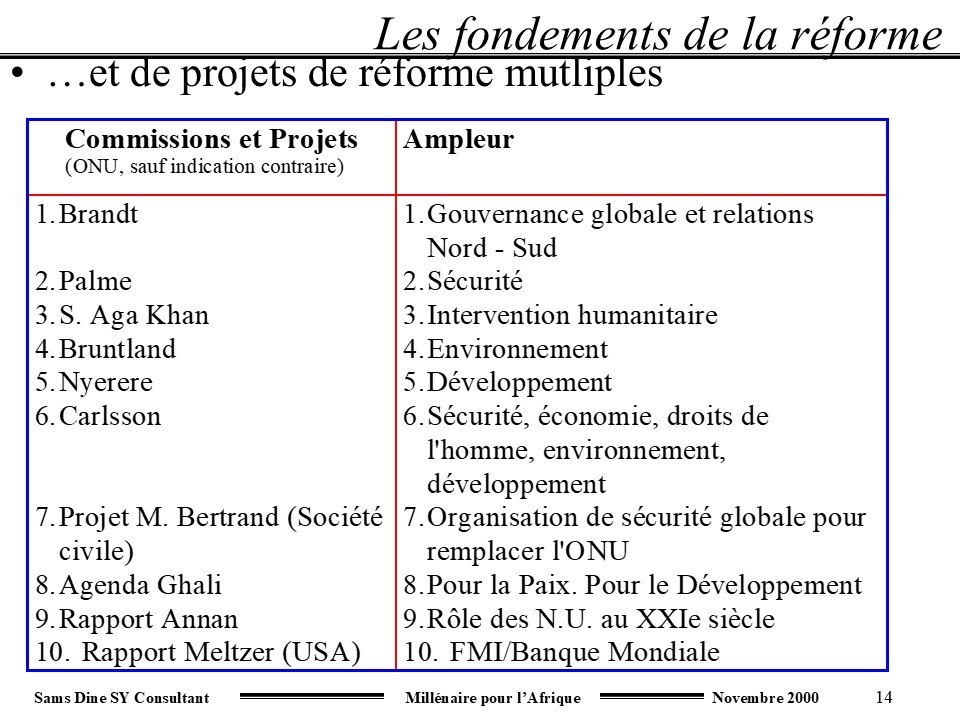
- Accra

C.I.-U.N.U./I.N.R.A Workshop
2. Homo Scientificus Démocraticus
Source : https://samsdinesy.org/we-the-peoples-also-have-the-right-to-democracyright-of-reply-by-sams-dine-sy-to-the-editorial-of-le-monde-published-on-08082025.html


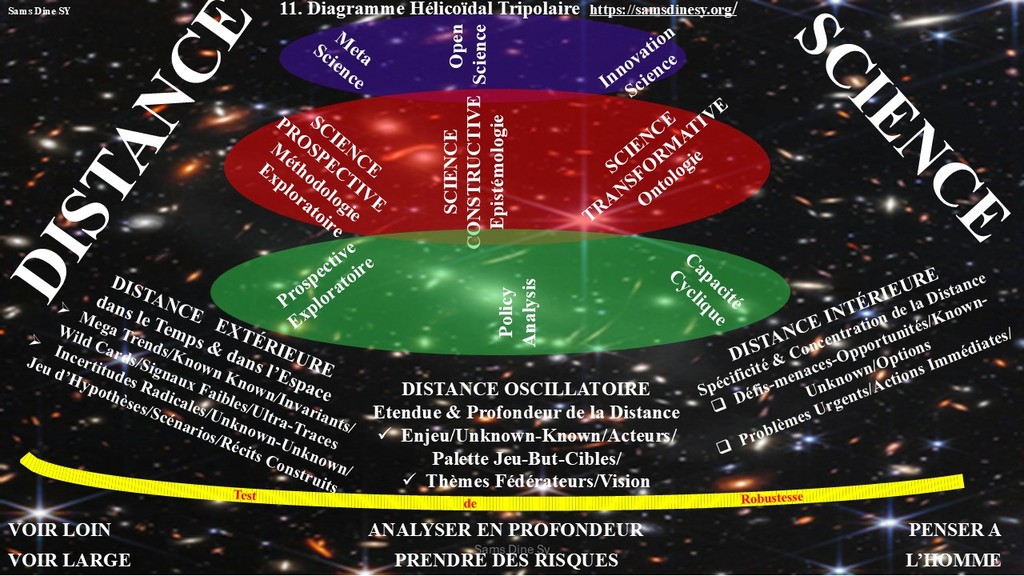
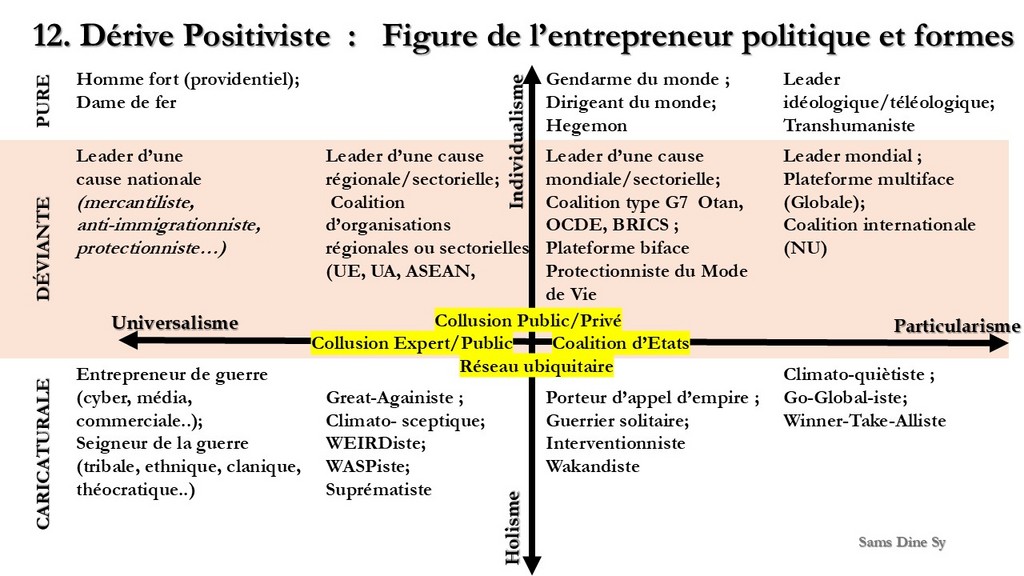
3. Distance Science : Paradigms - 3 Clusters
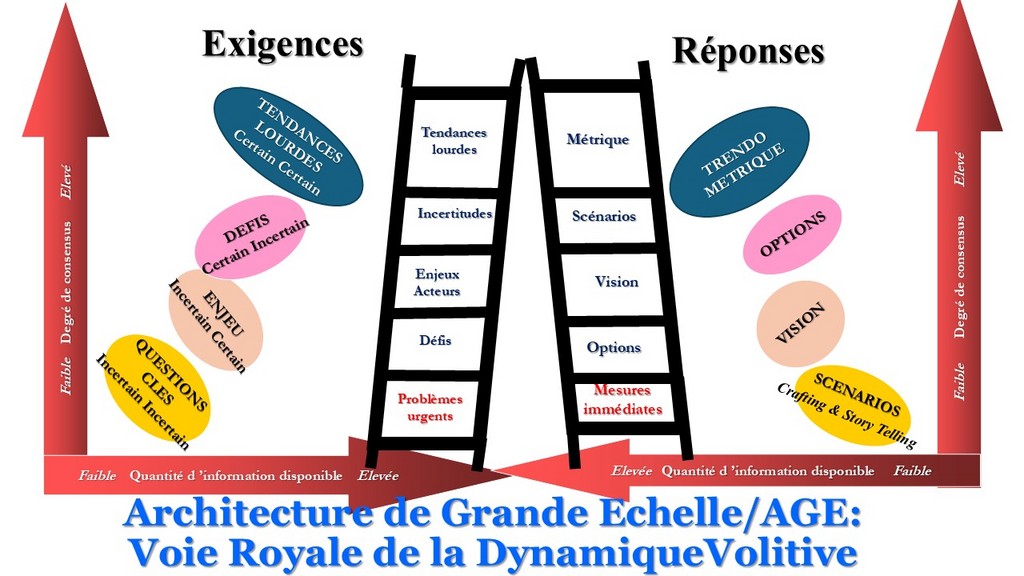
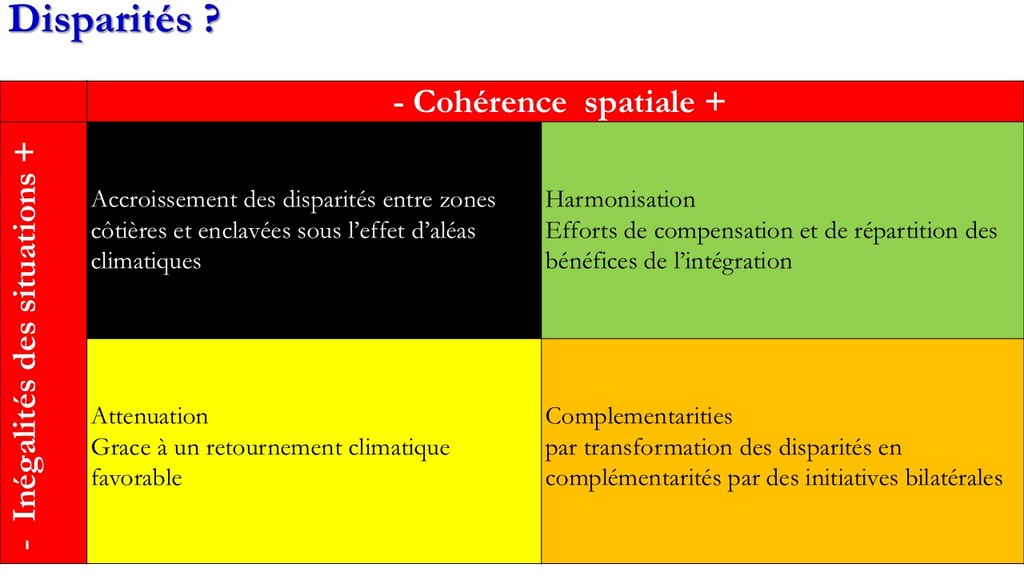
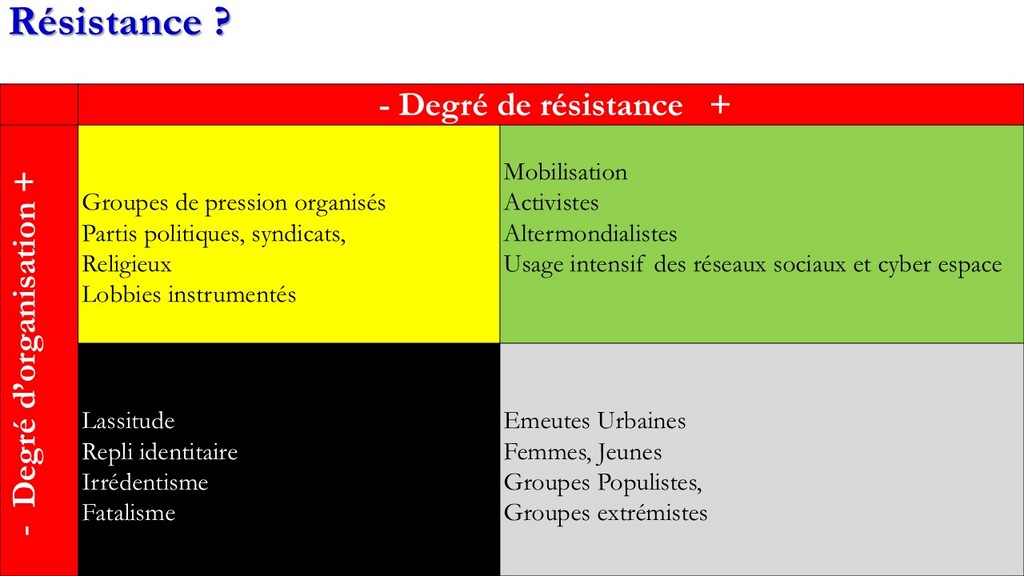
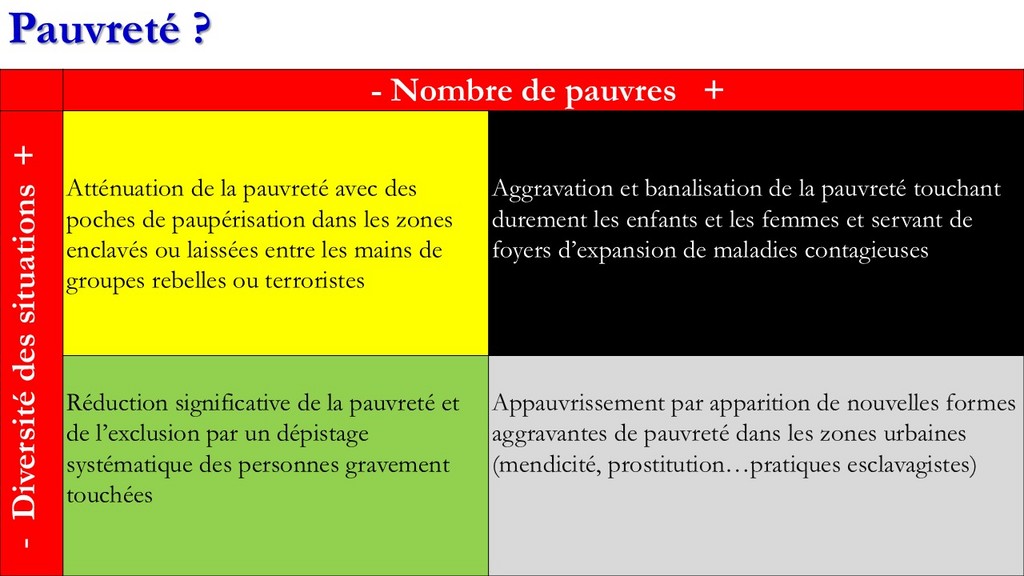

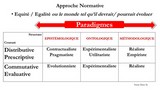
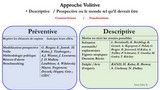

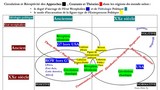
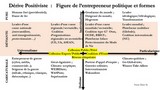

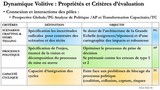
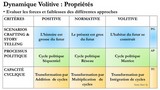

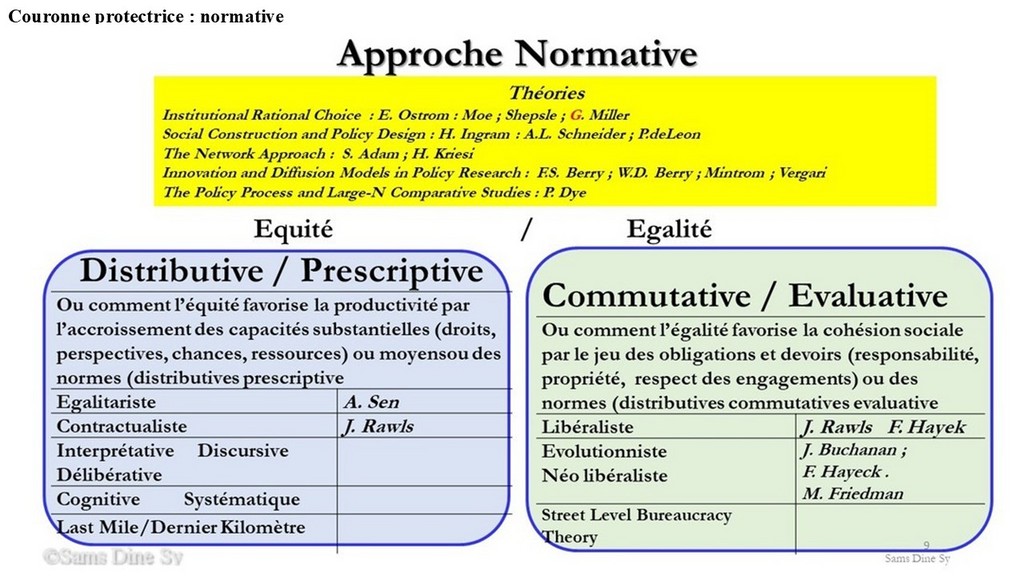

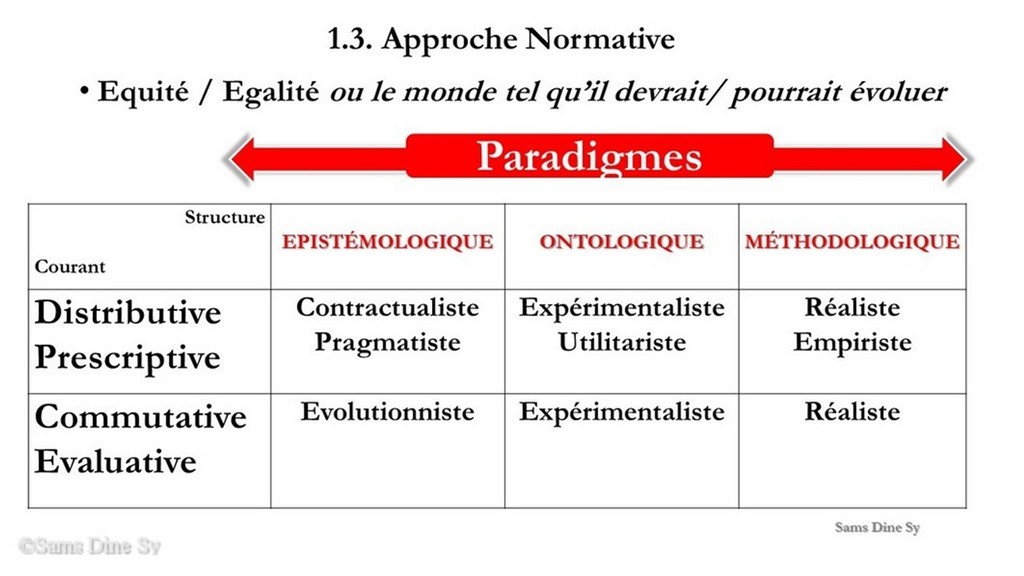

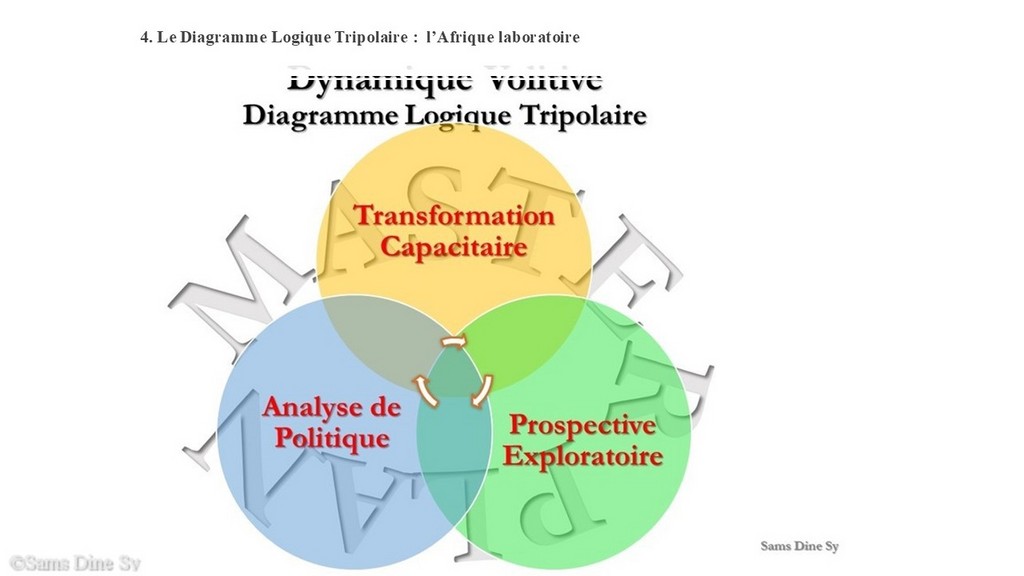
4. Other bibliographical references /3 Clusters
- Prospective:
Trendometrics
- Prospective:
Uncertainties ; Scenarios
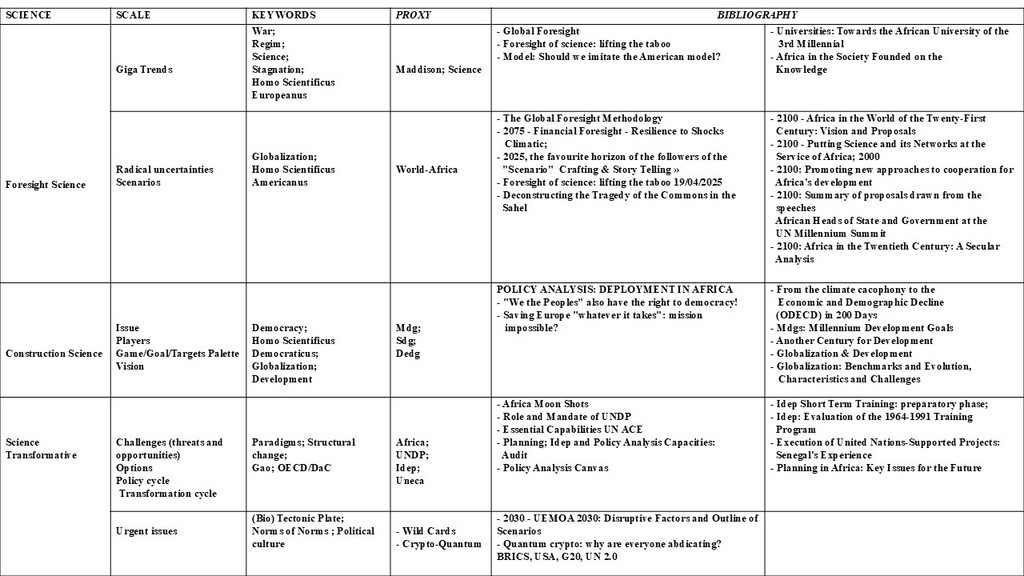
| - La Méthodologie de la Prospective Globale - La Mondialisation : Repères et Evolution, Caractéristiques et Enjeux - 2100 - L'Afrique dans le Monde du XXIe Siècle : Vision et Propositions - 2100 - Mettre la Science et ses Réseaux au Service de l'Afrique; 2000 - 2100 : Promouvoir de nouvelles démarches de coopération au service du développement de l’Afrique - 2100 : Synthèse des propositions tirées des discours des chefs d’États et de gouvernement africains au Sommet du Millénaire de l'ONU - 2100 : L'Afrique au XXe siècle : Analyse séculaire - Prospective Régionale : Afrique Berceau & Précurseur 2075 Prospective Financière - Résilience aux Chocs Climatiques - Prospective Régionale : Afrique Berceau & Précurseur - 2025, horizon préféré des adeptes du « Scenario Crafting & Story Telling » - Prospective de la science : lever le tabou ... | |
- Constructive:
Stake; Player; Vision
| Analyse de Politique: Déploiement en Afrique - « Nous les Peuples », avons droit, nous aussi à la démocratie ! - Sauver l’Europe « quoi qu’il en coûte » : mission impossible ? - De la cacophonie climatique aux Objectifs de Décroissance Économique et Démographique (ODECD) dans 200 Jours - Europe Must Be Saved! - Mdgs : Millenium Development Goals - Another Century for Development - Mondialisation & Développement - Mondialisation : Repères et Evolution, Caractéristiques et Enjeux ... | |
- Transformative:
Challenges; Options; Urgents
| - Africa Moon Shots - Rôle et Mandat du PNUD - Capacités essentielles UN CEA - Audit Idep Planification et Capacités d'Analyse de Politique - Policy Analysis Canevas - Planification en Afrique : Questions Clés pour l’avenir - Formation de Courte Durée Idep : Phase préparatoire ; Idep; 1991 - Idep : Evaluation du Programme de Formation 1964-1991 - Exécution de projets appuyés par les Nations-Unies : Expérience du Sénégal ... | |